Songs to Adventure By
Leave a reply
Today was our day to see the village of Kalibaru. Supri arrived at 9:00 with two dokars. Tanja, Wahyuni and I got in and drove first to the main highway which we followed for ten hair raising minutes, then to smaller roads which took us through the tiny lanes of the village. Supri’s goal was to show his village and several of the small cottage industries that thrive here.
First stop was an aluminum pot and pan factory on the side of the highway. Hanging outside were row after row of pots, pans, ovens and utensils which had been made in this tiny shop. We went inside and watched a half dozen men working by hand, pounding aluminum rolls into all kinds of shapes.
We drove down small country lanes and kampongs to the brick factory, a set of brick kilns under a roof, behind which were rows and rows of bricks drying in the sun. Several workers were digging clay, mixing with water and pressing them into molds to dry on the ground before being fired. Hard work!
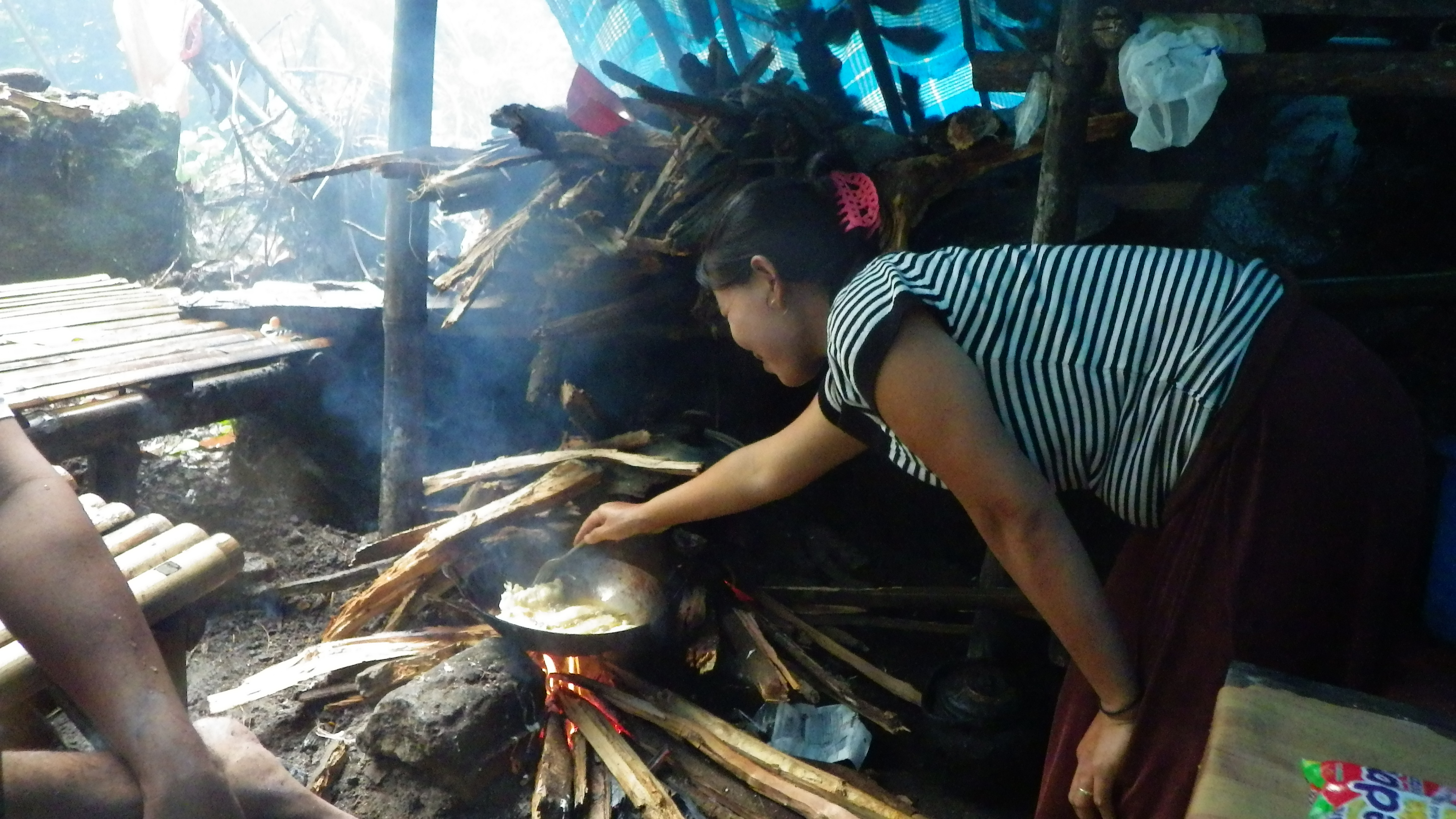
Across the road was a series of shacks, starting with a fire under a roof on which was a 50 liter pot bubbling away. Several women and children sat watching and stirring. This was the final phase of boiling down the coconut syrup to make sugar. We walked behind these buildings through a dense forest of mosquito infested cacao trees to a man whose job it is to climb all 40 coconut palm trees twice daily to harvest the fruity sweet nectar from the coconut flowers. Up he went, quickly, 30 meters to the top, a large plastic gallon jug dangling from his belt. Bits of hard flowers rained down on us, then he was down with a thin, sweet watery liquid which would be boiled down to sugar. Very hard work for very little profit, judging from the status of their dwellings, but they all seemed to be proficient at their jobs. Little kids came along, cartwheeling and wanting high fives constantly.
The dokars then took us to the old village, with tiny lanes lined by houses and shops, very lovely. We ducked into a very narrow and dark alley, ending up in a tiny workshop with more fire heated pots where tofu was being made. By hand. Great quality, very labor intensive. Down the street was a factory where peanut snacks are made.
We then crossed the busy highway on foot and entered the local pasar or market. Everything under the sun was for sale in a huge, low ceilinged series of stalls. The food especially was fascinating, with produce and fresh meat and dried chips and fish of all kinds sitting out, flies buzzing all around and no refrigeration. Quite a scene. We tried some fruits hitherto unknown to us, very sweet and refreshing.
Our tour ended with a visit to the house of Supri, a beautiful small house at the end of a neighborhood street on the rice fields with a view of the mountains. Supri beamed with pride as he showed it to us. We had cappuccino and spekkoek with homemade emping and enjoyed the breeze and the view. Delicious.
Riding in a little wagon drawn by a small little horse over backroads and through kampongs made you feel you had gone back in time at least a hundred years. What a great way to see rural East Java.
For pictures see Tanja’s Facebook
We are staying at a lovely guesthouse called Rumah Kita, built by a Dutchman, Peter van Luijk, and his wife 25 years ago. It is on several hectares of land just outside the village of Kalibaru. There is a main house, the rear of which is a large, open veranda facing a large, open garden with the volcano Gunung Raong in the background. When we arrived Saturday March 16 after a 7 hour hair-raising drive from Malang, we were greeted by Peter and his two adopted Indonesian children, both in their 20s visiting from Holland where they were reared. We were given Bintangs (Indonesian beer) and nasi goreng for dinner. We slept well in a small guesthouse facing the garden.
At 9:00 Sunday morning our two Indonesians, Supri and Weedodor, picked us up for an overnight trip to Sukamade Turtle Beach. First stop was the small Indomarket for lumpia and other supplies. We then drove for the next 5 hours over smaller and more bumpier roads through smaller and smaller kampongs (Bahasa for village). I actually had one of those aha moments when I realized rural Indonesia is actually more developed than rural Kentucky. In these tiny villages with dirt roads, dirt front yards, there is always a small food store, a vegetable fruit market, clothing store and some sort of motorbike repair place. There is usually a “Gas station”, which is a stand outside the house with recycled liter bottles of gas for sale. Even though these shops don’t offer much, they do provide the basic necessities for the village, many times only appearing to contain a few dozen houses. The nicest building in these kampongs is the mosque. And many of the houses are painted brightly, with tile walls and veranda floors, beautiful lacquered front doors and front yards of gravel or dirt. People seem to be always fixing up their houses, and it seems to take awhile because they are in various stages of renovation. But there is obvious pride in their homes.
Contrast that with rural Kentucky where towns many times are lucky to have a gas station food mart. Town centers have been gutted so necessities are a long ways away at the Wal-Mart. Many times homes are in disrepair. People look depressed. So which country is more civilized?
Ok. Now I have to stop and insert another comment, this time about Islam. Java is mostly Islam so each town has at least one mosque. And apparently anyone can set up a mosque. So they are ubiquitous. What is annoying is that in the last ten years or so they have all decided they should use loudspeakers to call their flock to prayer and to amplify the services so it is impossible not to hear them. This means that for several hours every day we are subjected to the howling that comes from the mosque. Even in this tiny kampong. I think Islam is probably the most proselytizing religion on the earth today. Seeing the women in headscarves you realize how controlling Muslim men are over their women. It is just not an appealing religion in my view. (Insert from Tanja: It is such a contrast with Hindu Bali where it is one big celebration of the beauty of life (and women!) shown by sweet little offerings of flowers and rice everywhere. I am writing this while the local mosques are competing to be heard with their calls that sound like a whole tribe of cats in heat. Enough already!!!)
Back to Rick: Anyway, today’s five hour drive into what you would think would be nowhere was fascinating. The coffee, cocao and rubber plantations are thriving. Each tiny kampong we drove through had housing for the plantation workers. Except for a 5K trail through the mountain jungle, houses and cultivated land lined even the most rugged of roads. One realizes how much the population of Indonesia is growing. There are very few nowheres here.
We arrived at a beach of a little fishing village, which was pristine without a soul in site. We walked along it dodging the surf for perhaps a kilometer toward some bright colored objects on the sand. As we approached it was obvious they were long, brightly colored fishing boats pulled up on logs onto the beach. Behind them was a little village with a shack where we visited with the locals and had our lumpia and shared a Bintang. We then drove an hour more, over a nearly impassable road through mountain jungle, seeing toucans and monkeys in the trees. It was full of jungle sounds, no motors to be heard once the Diatsu left us to walk for awhile.
We left the jungle and went through muddy roads fjording rivers until we came to a small kampong this time with only thatched cottages and no electricity. Set back on one side was a bright, clean building with doors and a veranda which turned out to be the place where we are to spend the night. It is called the Guest House at Sukamade Beach and is where people stay who come to see the turtles.
Rick
Now comes the part written by Tanja-
It seems like all the magic in Indonesia happens right after sunset or before sunrise. We just got back from an overnight trip to the sea turtles in Sukamade. Absolutely fantastic. It takes about 3 hours from here to get there because it is mostly a dirt and very bumpy road, through villages, a fishing town, the jungle, rubber and coffee plantations, kalies (=river). The amazing thing is that it is still very populated there. It is just that the government sucks in Indonesia and can’t even provide decent roads.
We had dinner at the guesthouse and then left for the beach around 7:30 pm again in a jeep from the eighties and via a dirt road that by now had changed into a mud river because of the tropical down pores (it is still rain season). We ended up in some kind of camp outpost where they incubate the turtle eggs that the turtles lay at the beach. From there you have another 20 minute walk with the turtle rangers. When you get at the beach they tell you to sit down and wait till they give you a sign with their lights that it is safe to come. They look for fresh tracks that tell you that a turtle has come to shore to lay her eggs. But you can’t approach her till she has buried herself and starts laying her eggs. If you do before she starts laying her eggs she turns around and goes back to sea.
So there Rick and I were sitting in the pitch dark. It was overcast so all you could see was the white of the surf, occasional lightning in the distance and a meek attempt of the moon to get through all the clouds. After about 20 minutes we got the sign of a flashing light from the far end of the beach that it was safe for us to come. It was so exciting to walk over the beach in the dark, no sound except the surf and some thunder far away in the mountains. By the time we got to the place the turtle had already started her way back to the sea. Unfortunately the rangers came too late to harvest the eggs. A wild swine had already made a gourmet dinner of the eggs. It was fascinating, though, to watch this enormous beast (this one was a one meter green back) moving slowly to the water. She stopped about every 5 minutes, sort of deflated and then she started pumping herself up for the next two meters. She actually sounded like a bicycle pump. Finally she made it to the surf and we waved her goodbye when she let the surf take her into the Indian Ocean.
By that time we had gotten the sign from the other end of the beach that they found another turtle ready to pop. On our way over there we saw the ruins of another nursery where our villain, the swine, had been pigging out on turtle eggs. Fortunately the rangers did get to our last turtle on time. By the time we got there she had already laid about 80 eggs (they are the size and shape of ping pong balls). We were so fortunate to witness the laying of some 40 more. Absolutely magical! Apparently, for this one it was her first delivery on this beach so they took all her measurements (104 cm by 80 cm), gave her a ring and some other stuff. On our way back to the camp we ran into our villain, a big mother swine with a tiny little piglet. Oh blessed circle of life.
FROM GUESTHOUSE RHUMA KITA

ALONG CANALS AND RIVERS
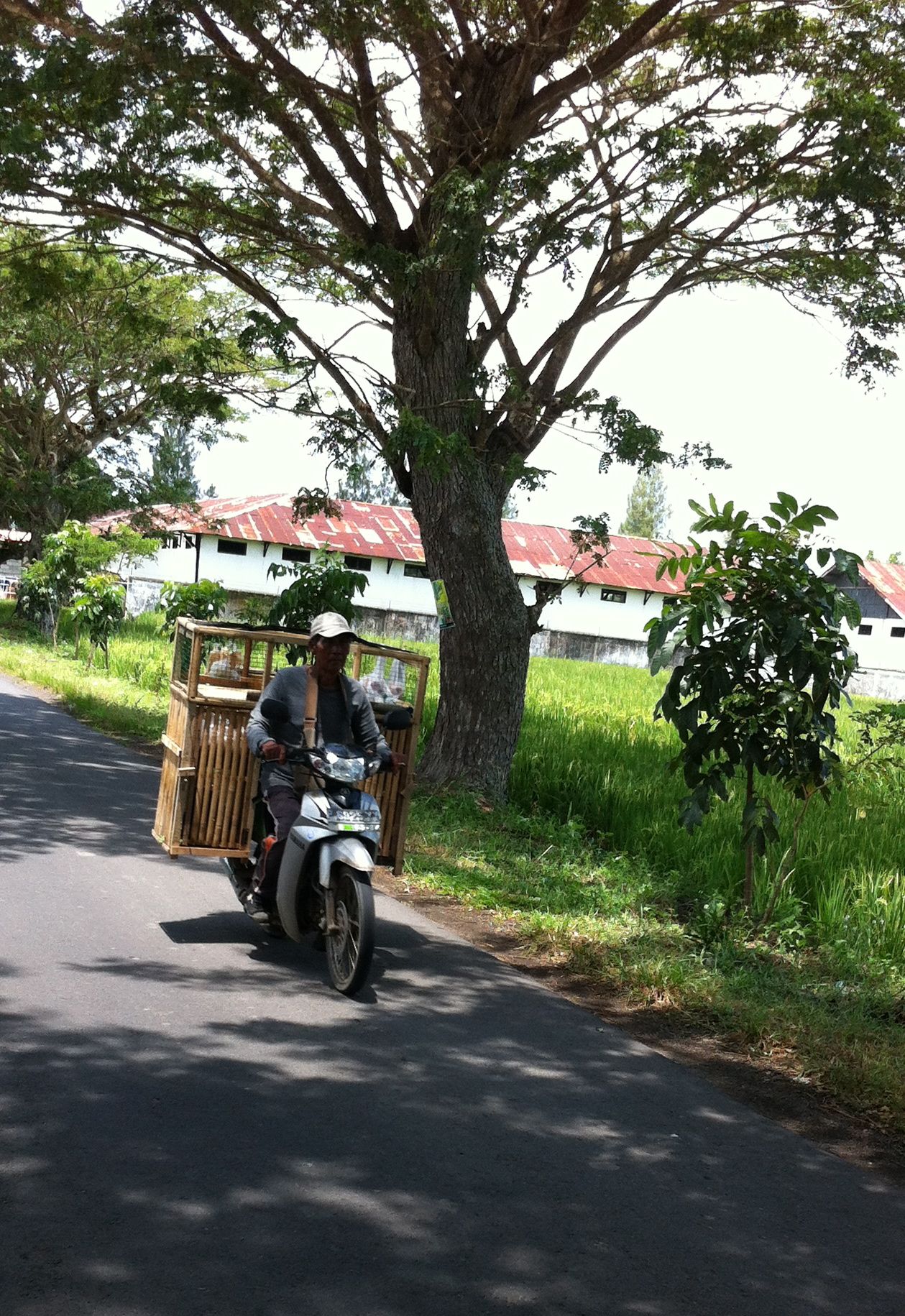

PAST BEACHES AND WATER BUFFELOS

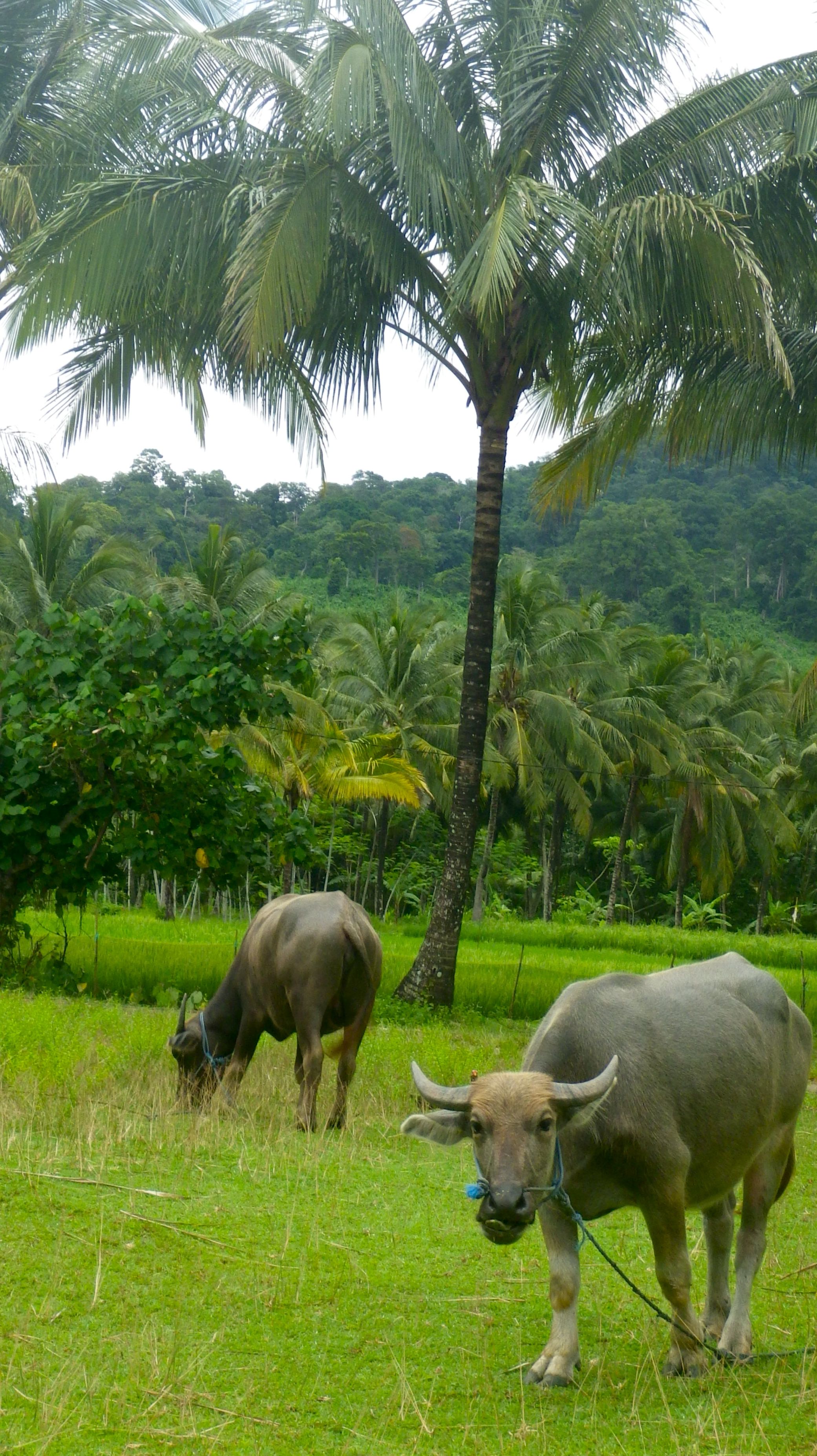
INTO A FISHING VILLAGE


PAST MORE BREATHTAKING VIEWS AND INTO THE JUNGLE

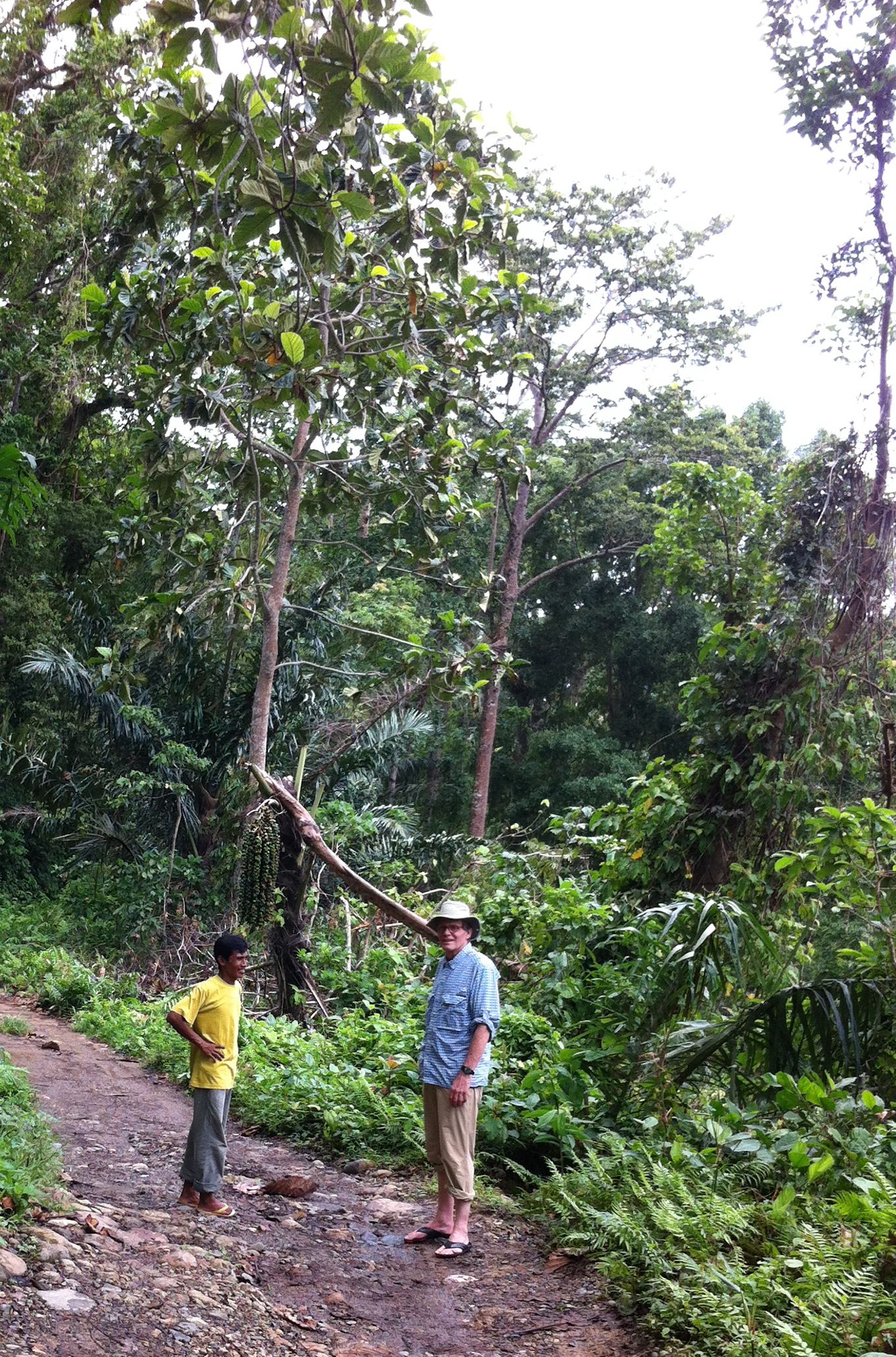
THROUGH KAMPONGS
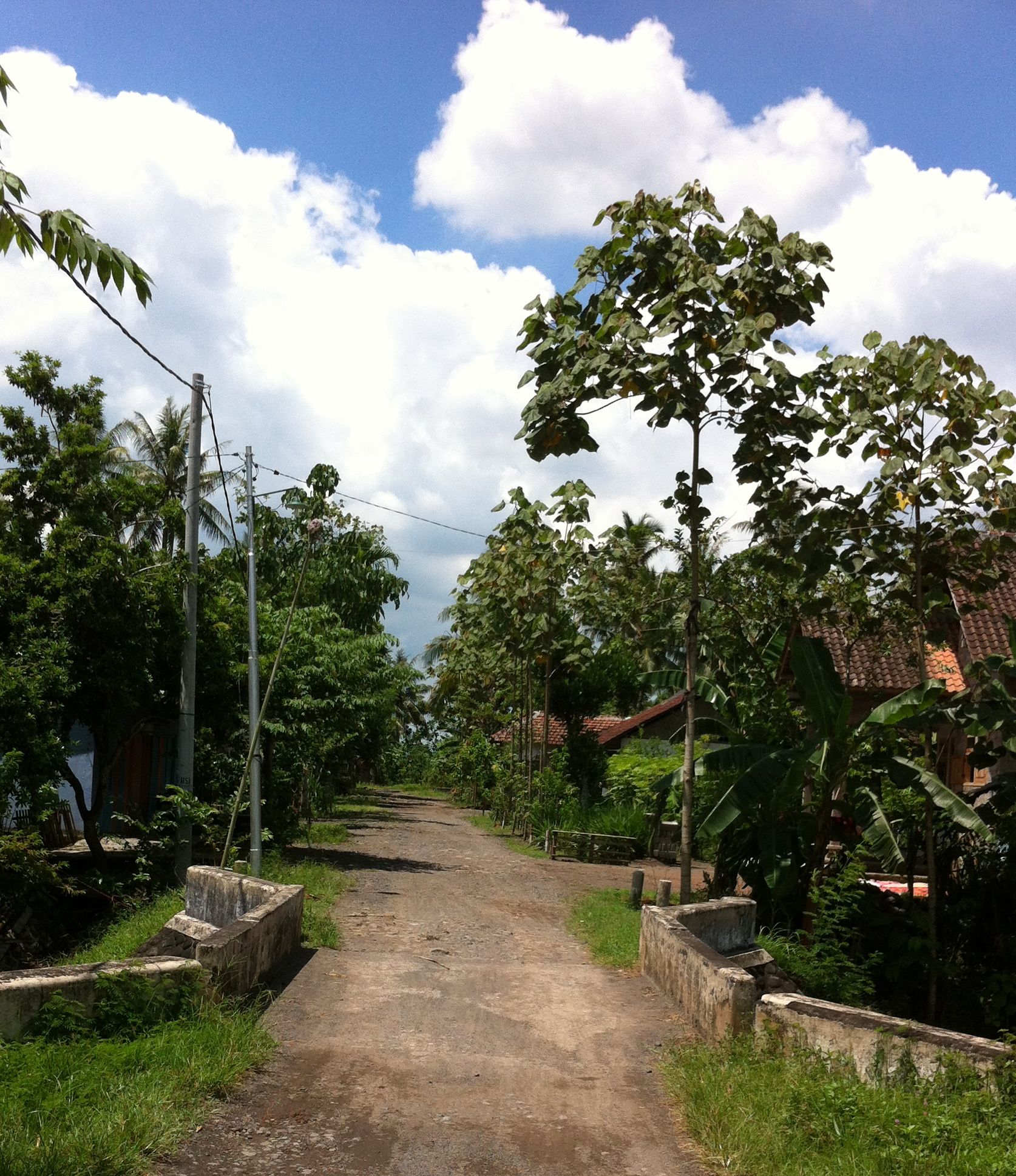
AND THROUGH RIVERS
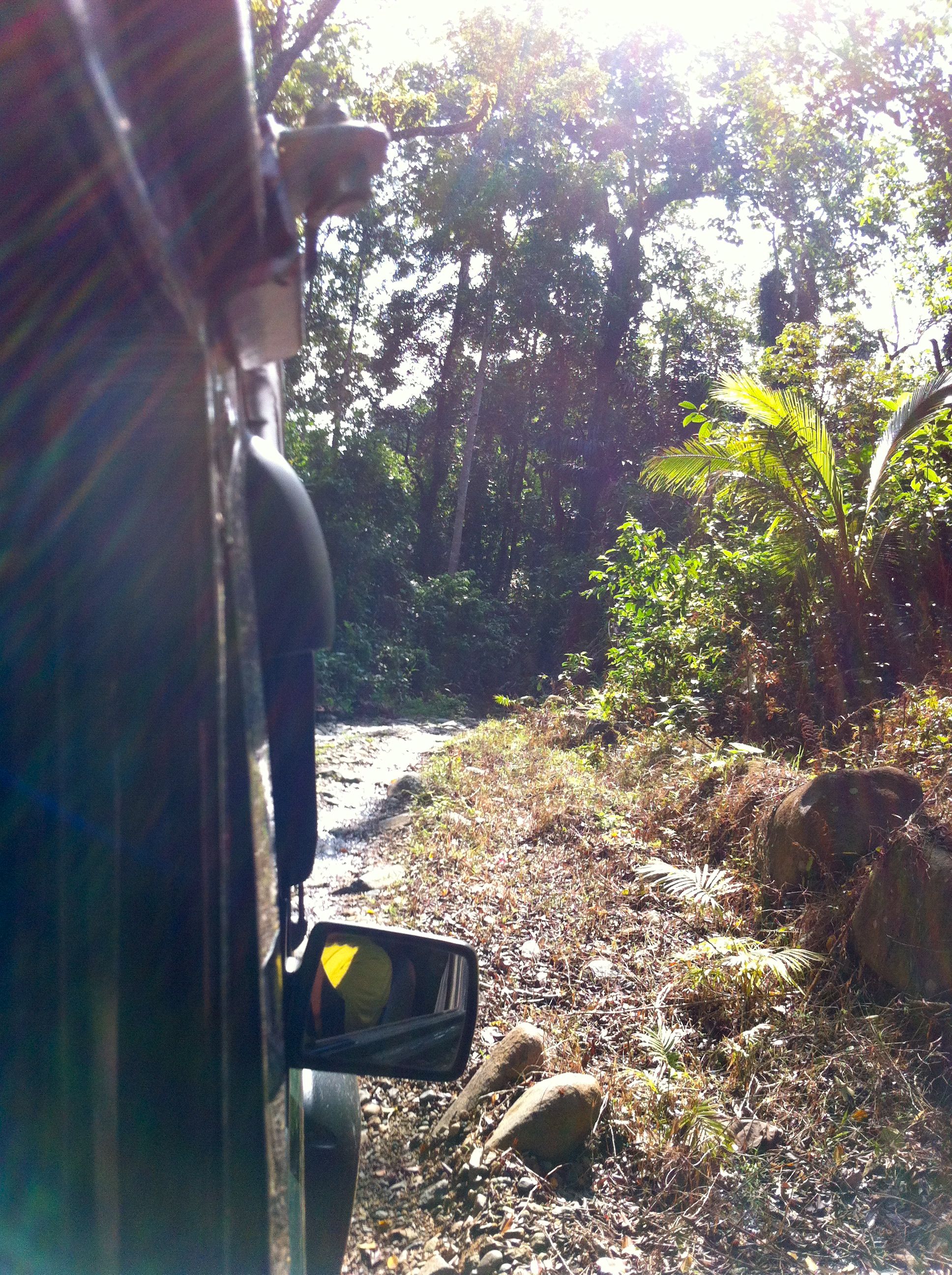

TILL WE FINALY GOT TO SEE THE SEA TURTLES


Japanese Concentration Camps in Semarang.
When I decided I wanted to spend a few months in Indonesia it was to dig for my family roots. I was aware that there was another side as well, the family sadness caused by the Japanese occupation of Indonesia, but I wasn’t sure I wanted to go and look for it. As it turned out the decision was made for me. By chance the first part of my journey would be spent in Semarang. When I asked my mother about Semarang she was quiet and then she said, “I never wanted to go back to Semarang”. Waarom niet, mammie? Because that is where the Japanese concentration camp was!
There was no question any more whether I was going to visit the camps. It had been the big elephant in the room all my life. I wanted to acknowledge it and then tell it that it is time to leave. And so in the first two weeks I was in Semarang I spent my weekends finding and visiting the camps and the graveyard were most civilian victims of the camps are buried. And with it I found myself doing more research (thank God for the internet) trying to answer so many questions.
Why did Indonesia get involved in WWII? Japanese expansionism in the Asian corridor had started long before the start of WW II in Europe, with their invasion of Manchuria in the twenties and Indochina in the thirties. The occupation of Indochina was met by crippling economic sanctions from the United States and the west, effectively cutting off Japan’s imports of oil. For Japan, the Netherlands East Indies was the best available source of oil for their war effort in China: Borneo and South Sumatra produced more than eight million barrels a year. But it was not just oil they were interested in. They also needed the rubber that was grown in the many plantations. And so Japan invaded Indonesia starting January 10, 1942, with the Netherlands capitulating soon after that.
At the time of the Japanese invasion of Indonesia my mother, eleven years old, was living on a coffee and rubber plantation in East Java, called Treblasala, near Glenmore. After the capitulation, the Japanese immediately implemented their policy of cleansing Asia of any western influence. Dutch money was replaced by Japanese. The Dutch language was abolished. And Europeans! including my mother and grandmother, were put into military or civilian intern camps. The mass internment of Totok women, children and old men started in October,1942.
After the capitulation my grandfather, like most plantation owners in East Java, joined the resistance. The resistance didn’t last long and most were executed by the Japanese early in the war, including my grandfather. Before that he had managed to send a letter to my grandmother telling her to go register at an intern camp in Malang. The situation in Indonesia was not safe for Europeans or Indo-Europeans. For the first year of the war, they were interned in Wijk Malang, a housing estate surrounded by a barbed wire fence. Between November,1942 and January, 1943 about 7,000 women and children ended up in camp De Wijk in the Bergenbuurt (Mountain quarter) of Malang. My mother was in this camp with her best friend Joris de Booy and her family. In the fall of 1943 they were all transported to camps in Semarang.
CAMP LAMPERSARI
I started my pilgrimage with visiting the last camp my mother was imprisoned in Semarang, called Camp Lampersari.
Lampesari was one of the first model Kampongs (villages) the Dutch had designed for the Indonesian working class in the 1920s. When the Japanese started the interning of Europeans in camps they would set off parts of a city, just like the getto in Warshaw. Lampesari is now again a working class neighborhood of small little houses with narrow little streets. My host, Erni, went with me. She was able to ask some of the people around the neighborhood where exactly the camp was. The young people there were not aware at all that this had been an intern camp but some of the older people did remember and pointed out some of the original houses built by the Dutch and which streets were part of the camp. It was moving to be there, so very different from what I had imagined. The houses and the streets were so small. Difficult to imagine that a single family lives in these houses now, let alone 10-20 people during the war. But is wasn’t just the overcrowding (there were almost 8,000 people on 1 square Kilometer) that made it hell, it was also the lack of enough food and rampaging illnesses like malaria and typhoid. But most of all, it was the camp commander who was called “de Mepper”. Everything and anything would provoke him and would cause him to start hitting the prisoners, young, old, sick. It didn’t matter. My mother and her friend, Joris, did everything together in this camp, work in the kitchen, find food, work in the field, clean (there was an open sewer going through the camp).
I thought this was the only camp my mother had been in, in Semarang, but when I talked to her after my visit she told me that there had been another one much, much worse than Lampersari and where she had been before being moved to Lampesari. She couldn’t remember the name but remembered that it was a religious institution. In the book that I had found in a Dutch bookstore, called Reizen door WWII Indonesie, it mentioned only one religious institution that was used as a camp and that was Camp Bangkong, a cloister.
CAMP BANGKONG
When I walked into Bangkong via de church I was struck by a deep sadness. There was something in the air that felt very heavy. The nuns who are still there were very nice and open. It had a courtyard where boys were playing basketball. I learned later this was now a school for orphaned boys. I walked through the whole cloister. At the end you were asked to write in a book. There were many stories there of Dutch visitors about their mothers, grandmothers, uncles, fathers. Very intense and moving. As it turned out this was not the camp my mother was in, but I like to mention it anyway. At first this camp was used for both women, men and children. Later in the war the Japanese made this into a labor camp for boys and old men. Boys as young as ten years old were separated from their mothers and sent to this camp.
KARANGPANAS
I visited Bangkong on a Saturday. When I talked to my mother that night she remembered the name Karang Parnas. That camp was not mentioned in the book. I had planned to visit the graveyard, Ereveld Kalibanteng, in Semarang that was specifically constructed to honor the civil victims of WWII. It is called the women’s graveyard because there are so many women buried there. It has a beautiful monument (and only monument in Indonesia) in memory of the women who died in the concentration camps. There is also a very touching monument for all the boys who died in Bankong. It says “they were still so young”. When I was walking through the graveyard I read again the paragraph about who all was buried there. And there it was, Karangpanas.
With the help of my iphone GPS I was able to tell my driver how to get there. It is in a cloister in the hills of Semarang. Actually it is very beautiful. It was closed when I got there. I walked around it and found a guard whom I persuaded with my hand and feet to open the door. I saw the square where the prisoners had to stand for hours in the blazing sun. Nobody was there, just the guard and me. My mother doesn’t talk about her war experiences (most survivors of Japanese concentration camps don’t) but I have been able to reconstruct a little what it was like through research.
The distance from Malang to Semarang is about 500 miles but the train that took the prisoners to Karangpanas took two days. It would stop for hours in the searing heat and there was hardly any food or water. It was crowded and no place to use the bathroom. In the barracks there was a long continuous plank bed alongside both walls. Each person was allocated 20 inch (50 cm) of space. No more space or privacy. The food situation was terrible and you never knew when food would be next handed out. In this camp a lot of the men were already very old, and since they were dying like flies my mother had to wash the bodies. This camp was closed after about 7-8 months. All prisoners had to walk, with the little luggage they still had left, from there to Lampersari.
Karangpanas was the worst of the camps my mother was in, but they were all terrible, all across Asia. By their treatment the Japanese made it clear that prisoners
should have no expectations. They were conquered and they were therefore worth nothing: “as scraps of paper in the wind.
On my last day in Semarang I went back to each of the sites. Giving a face to all the pain and fears caused by the Japanese concentration camps has been very healing. I hope I can leave them here now.
Bersiap Camp in Surabaya
Why did my mother end up in a camp for a second time? The end of WO II was not the end of fear and violence in Indonesia. The Japanese capitulation on August 14, 1945 created a power vacuum in the Dutch East Indies. Sukarno proclaimed independence on August 17, 1945. When the Dutch government tried to restore authority over the archipelago violence started to break out. By the end of September, young Indonesian guerrillas called pemudas had begun to take over government buildings and utilities in cities such as Yogyakarta, Solo, Malang, Bandung, Surabaya and Batavia. At the same time, Indonesian nationalists declared a general food boycott against the Europeans, and they cut off supplies of water and electricity to the internment camps where most of them were living. This period of violence and unrest is called the Bersiap period. It comes from the battle cry used by the guerrillas and means “get ready”. Cities like Jakarta, Semarang, Surabaya and more became the scene of continues kidnappings, shootings, murders, disappearance. Victims of the violence were mainly Europeans and indo-Europeans.
I knew that after the war she and my Oma were again interned in a camp in Surabaya but I had no idea why. After the Japanese capitulation my mother and Oma left Lampesari Kamp in Semarang. They took the train to Surabaya to stay with my great grandmother who didn’t need to go into a concentration camp because she was quarter Indonesian. Unrest was already very high and it is a wonder they actually made it to Surabaya unharmed. While they were living in my great-grandmother’s house the flag incident happened in the Oranje Hotel, now the Majapahit Hotel. On 19 September 1945, a group of Dutch former internees supported by the Japanese raised the Dutch flag outside the hotel. This provoked nationalist Indonesian militia, who overran the Dutch and Japanese, and tore off the blue part of the Dutch flag, changing it into the Indonesian flag. This incident started the revolution and heavy fighting between the revolutionaries and the British troops who were there to evacuate Europeans.
Shooting started in the street and bullet were flying through the house of my great grandmother. My mother – 15 years old- was hiding under a table. After the shootings had ceased, the pemudas came into the house and told my great grand mother that they came to confiscate the house and the they had 15 minutes to pack a view belongings and than had to leave. They spend 2 days roaming the streets of Surabaya before they ended up in one of the Bersiap camps run by the Indonesians. I asked my mother if it wasn’t horrible that after 3 1/2 years of imprisonment to end up in prison again. Her comment was that at least she knew the language and recognized the faces of her captors. She understood them.
Being here, and doing all this research I started to realize that the Bersiap period was in some way even more traumatic than the 3 1/2 years in the Japanese camps. Of course Indonesia had to become independent. It was their country not the Dutch. But for the mixed blood Dutch Indonesians it was heartbreaking. They had lived in Indonesia for generations. It was there motherland. They didn’t know the Netherlands. Yet, they were no longer welcome in the country of their birth and ancestry. Yet, they were not accepted in The Netherlands either. They didn’t belong anywhere anymore. And nobody wanted to hear their story. I like to end this with a poem by Leo Vroman
Kom vanavond met verhalen
hoe de oorlog is verdwenen,
en herhaal ze honderd malen:
alle malen zal ik wenen.
Come tell me after all these years
your tales about the end of war
tell me a thousand times or more
and every time I’ll be in tears
My dear friends,
After two months apart Rick joined me last Saturday March 9th. I can;t tell you how excited we both are to be together again. As he has now joined my pilgrimage it seems to be appropriate to let him tell you his firs impressions.
Here is Rick:
After 38 hours of travel I finally arrived in Denpasar Saturday afternoon. A shiny Tanja greeted me at the airport ( it is as you would expect warm and humid here) and we were driven to our first destination, the Warwick Ibah, in Ubud. This is a lovely open air series of I guess you would call them stone bungalows set on the walls of a ravine, the river heard but not seen below us through the thick foliage. I awoke early (4:30 am) unable to sleep so I am sitting in the living room of our bungalow emailing to you. The living room is really a porch with railings with nice furniture and bamboo roll ups if needed to keep the rain out. I can hear the rolling water below, birds, some of which called all night, now and then a gecko, crickets, and so far NO mosquitoes! It is unbelievably serene, otherworldly, something I have sorely needed after the pace of the last few weeks.
My initial impressions of Bali are that it is definitely third world. The airport, hot and smelly with humanity, is a combination of what I would call old oriental architecture with crumbling mid 20th century modern concrete minimalism. But the Balinese people, the guards, the money changers, the porters, couldn’t have been more friendly and even naive. The were always smiling, unlike the border agents in the US, say. There are huge signs everywhere in the airport warning of the death penalty for anyone found to be bringing illegal drugs into the country. Cigarette smoke everywhere.
The drive through Denpasar and the countryside to Ubud was chaotic. The road is four lanes, sort of, with a nice raised median full of flowers. But on the other side, the humanity side, there are all number of shacks, concrete bunker like stores, crumbling buildings of all shapes and sizes, and envy where motor bikes, weaving in and out of traffic, defying death constantly. People use them to convey all sorts of things, but I think they are mostly for commuting. There will be mothers with children holding on, couples with the woman dangling sideways on the back, some with helmets, most not, all styles of dress.
Tuesday is the Hindu new year festival, Nyepi, so everywhere people have made these huge monster gods for the parades Monday night. Apparently they are ceremoniously brought through the towns and some blessing is placed on the people, the monsters banished, then they are burned in a huge pyre so the rebirth, the new year can begin. On Tuesday no one goes out. People are asked not to use electricity. No one eats. So we have to get to our next hotel Monday morning, get all our devices charged, and hunker down in out hotel Tuesday. I am looking forward to it actually. Except I have already read all my paper reading materials so all I have left are electronic, thus the need for a full charge.
Last night we had dinner at our hotel. The dining room was a large open verandah surrounded by flowers, gardens and ponds. There are no walls, only bamboo roll down shades that can protect from inclement weather. The food was ok, not great. But the service was impeccable. The Balinese take to everything with joy and attention to detail.
Monday – It is now Monday afternoon. We were driven two hours through village after village to the eastern slopes of Mount Bantukaru where there is the lovely Bali Mountain Retreat, built and run by an Australian musician, Richard Kraal, apparently well known in these parts for his work revitalizing ancient Balinese music. It is a beautiful compound with a view all the way to Denpasar. We are surrounded by lush tropical jungle with all manner of flowers in every direction. Tanja and I are sitting in the top of a small tower whose purpose I do not understand, although for me it is breezy with a wonderful view and the peace to finish this email.
One of the things that has struck me since arriving is the spirituality of the local people. Three times a day at the resort, and apparently all over Bali, offerings are made to the gods. There are small prayer boxes all around the retreat. At a certain time, the designated person goes around to all the prayer boxes, including the lap on the statue of one of the gods, unusual places like what you would expect on an Easter egg hunt. He places small boxes made of reeds and wood, sometimes with folded or hand carved flowers, sometimes with food, all meticulously made and prepared by hand that morning, into the prayer boxes. He lights an incense stick which burns over the offering box such that the entire hotel grounds smell of this incense. It is so simple and honest, this awareness of the whole of life and the universe, practiced daily. This attention to detail shines through in everything that they do. Smiling.
As I said earlier, tomorrow is the Hindu New Years festival of Nyepi when everything stops on Bali. No one is allowed on the roads. So we will stay here. But tonight all the cities towns and villages have the parades I mentioned earlier. Because of the New Years activities, most resorts are closed and the places we have been are almost empty. Richard has a couple of Australian friends here, and then Tanja and me, so he is going to take us to the festivities tonight. The men must wear traditional dress, complete with Sarong, white shirt and white head scarf. Photos and full description to follow.
Love to all,
Rick
February 19, 2013
The original plan was that I would stay for one month in Semarang, Java and one month in Denpessar, Bali. But having had a little taste of Denpessar in January, I decided that one month of Denpessar was too much. It wasn’t just because the surrounding are not optimal but also the company is run by a very nice Danish guy but I didn’t come here to learn about Danmark. So I extended my time in Java as long as I could.
Before I left for Bali I spend a few days with Marnix in Jakarta. Marnix is teaching English to mainly young kids in an after school program. His post is in Bekasi, a city (more an outskirt) outside of Jakarta. Not the most exciting of places but Marnix lives in a nice neighborhood with shops, stores and the school, all at walking distance. I apologize but I have no pictures. By the time, the taxi finally found the place from my hotel (a 10 minute drive turned in one hour) it was dark and my phone was out of juice. The next day we went to Jakarta. This is not a city easy to appreciate let alone like. It is big, busy, dirty, noisy. We visited the old city, Kota Tua or former Batavia and capital of the Dutch Indisch. It could have been beautiful and probably was before the war. But like all the old Dutch buildings in any city it is not maintained at all. Even the buildings that house some of the major museums. It is actually sort of sad. I don’t know if it is because it is out of spite towards the former colonial power or that this is a reflection of the corruption of the Indonesian government who provide very little services for her citizens (not even decent garbage collection and infrastructure). Again, also in Jakarta we spend a lot of time in transportation where the driver had no clue where we were going to. The funny thing is that they don’t bother to ask anybody either. The high point of the our stay was actually getting totally soaked on the boat that took us to one of the islands of the Thousand Island north of Jakarta. After getting back, all wet and actually chilled, nothing is more satisfying than a hot shower (doesn’t happen that often here) and a fabulous meal in a beautiful restaurant called Dapur Babah.
And now I am in Denpessar, Bali. I am working for Soucila, a small little export company also run by the great Dane, Jostein (he is in Danmark), and an other great Dane, Steffen (who actually lives here in Bali). It is housed in a slum in Denpessar (no idea how to get here, and again, neither does the taxi). The house it self is actually sort of interesting but surrounded by mud and rusted corrugated sheet metal houses. And off course the holy cows (this is hindu land) and singing roosters. The “staff” not only works in this house they also sleep here. The staff consist of the Dane, Nisak – the administrative assistant and translator- and four girls who do the beading. Steffen sleeps in one room with a matras on the floor. All the woman sleep in the other, also with one big matras on the floor! I declined the one mattress deal and am staying in a “hotel” next door which is like an oases. I spend my time designing necklaces from Rudraksha beads. They are the seeds of the Rudrashka tree and are used for Hindu prayer beads. Hindu is the dominant religion in Bali. It means that each house have little temples (as does this one) and there are little offerings of rice everywhere. Which is very much appreciated by the rats! The rats here are bigger than the cats. Selamat datang Bali!
House and Surroundings
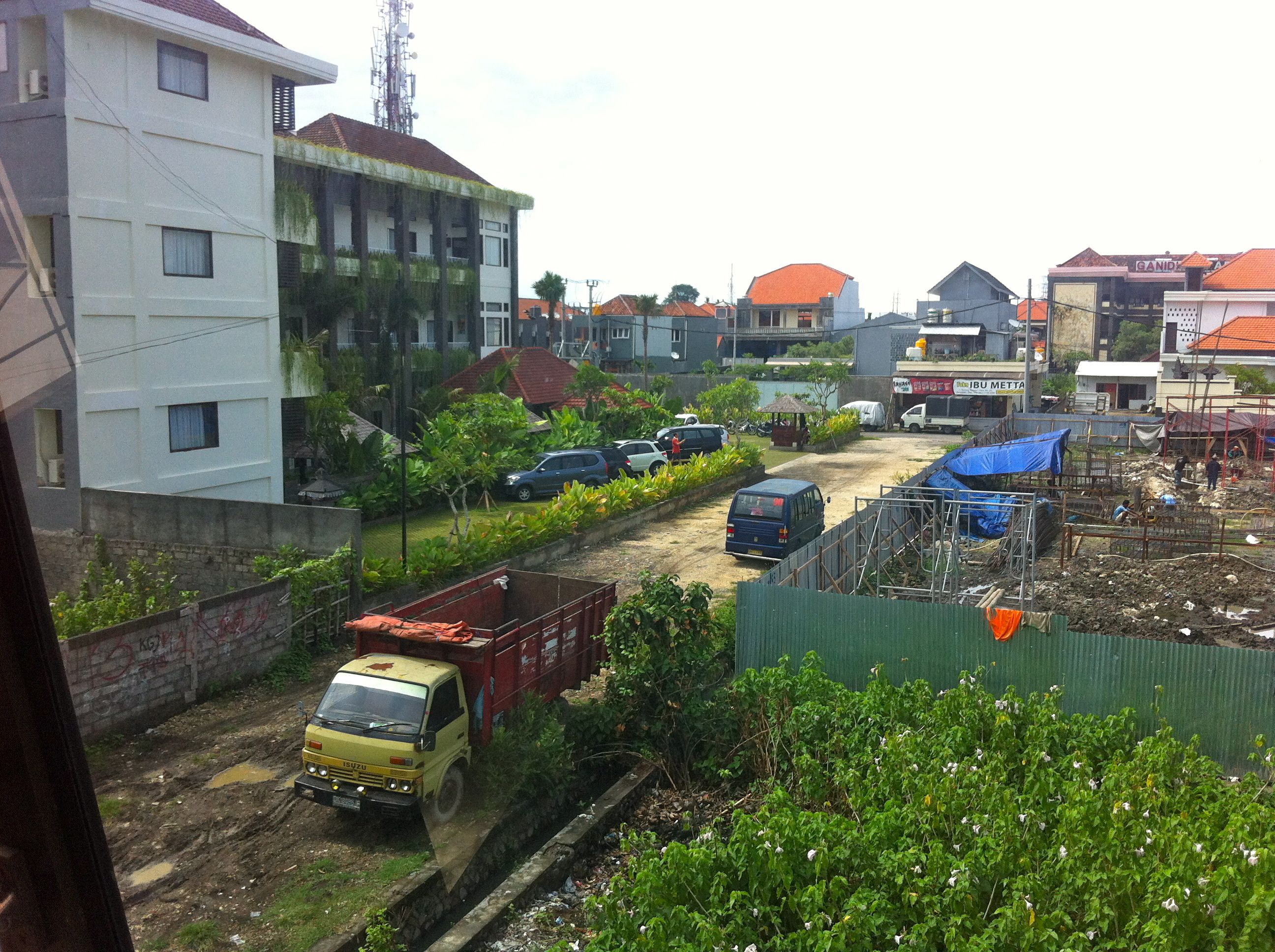
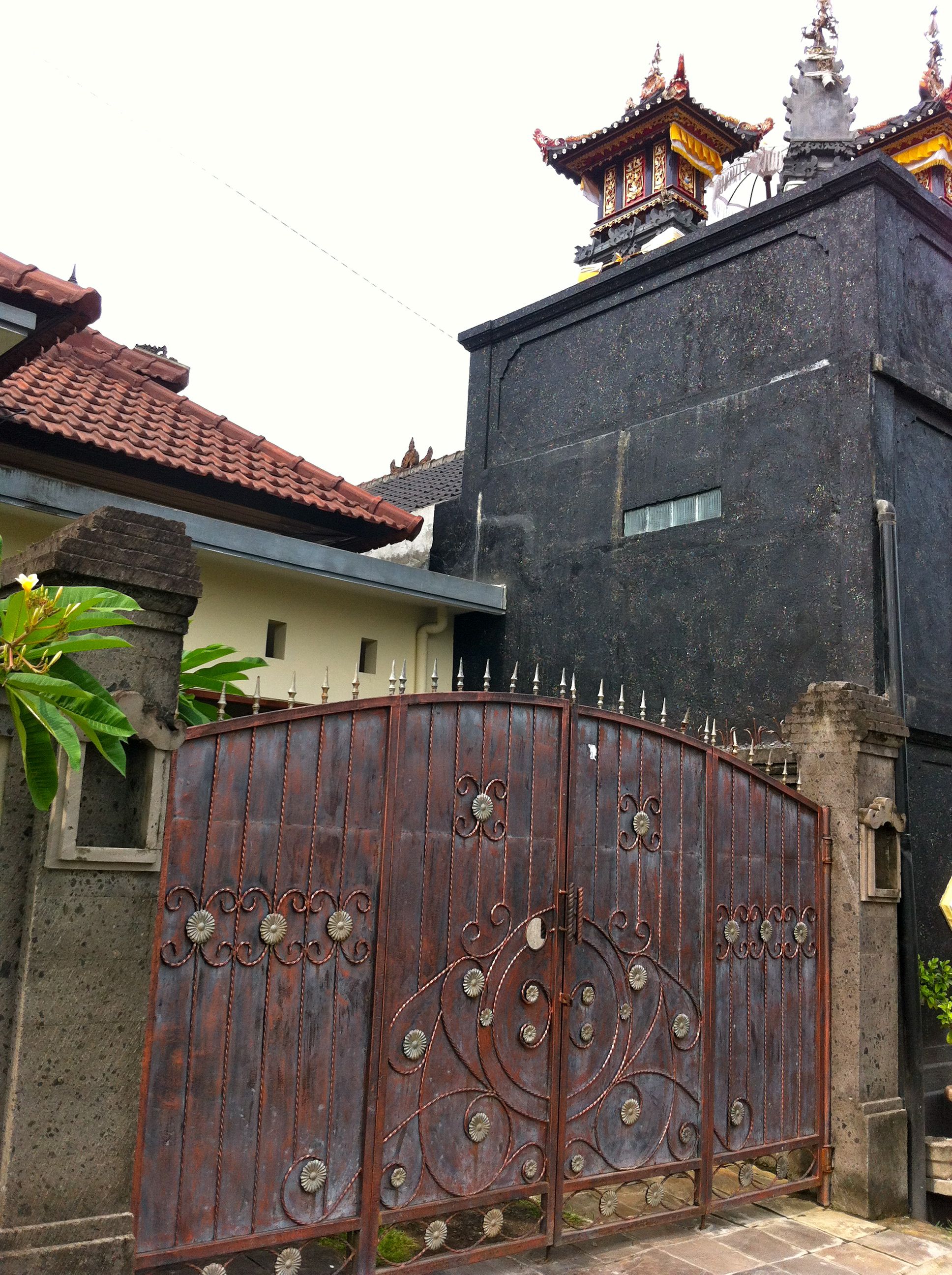

Neigbors


Staff and House Temple

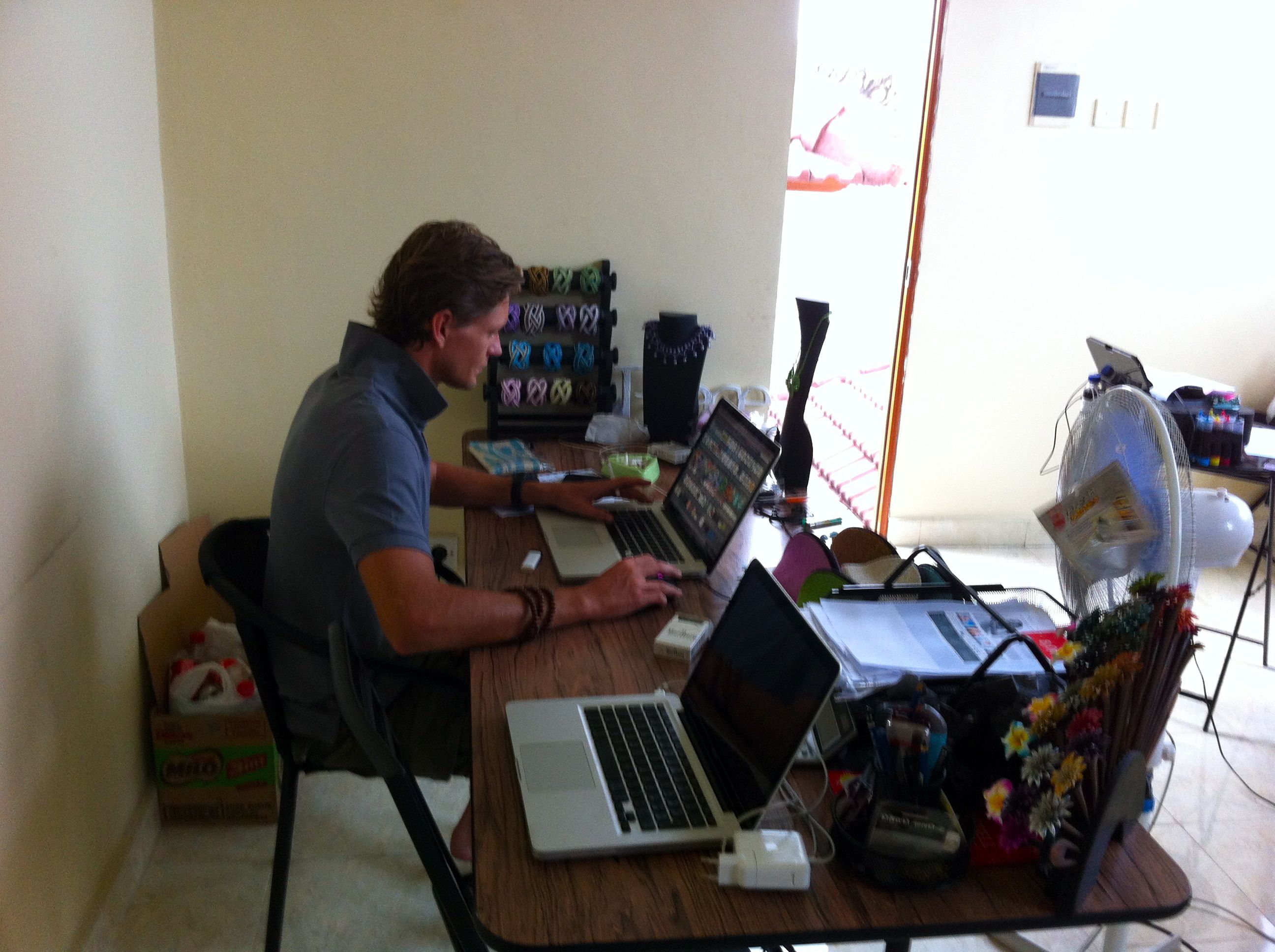
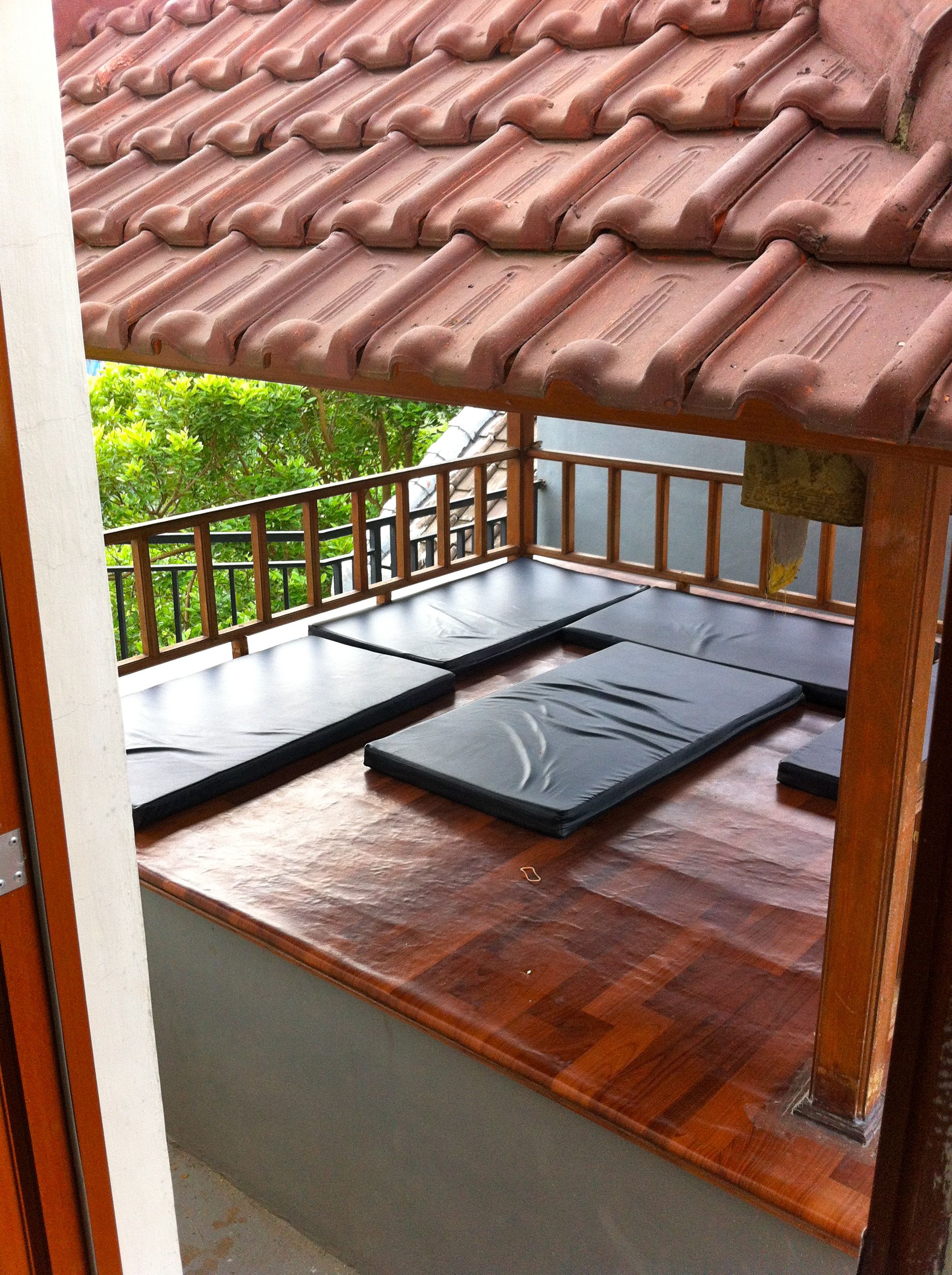
My work


February 11, 2013
That was what this weekend was about; it was about the journey much more so than about the destination. The destination for this weekend was that we were going to see the sunrise at the Bromo volcano. But that actually became the sideshow at most. It started with the train ride from Semarang to Surabaya.
The train was supposed to leave at 3:30 pm. At about 3:15 Erni gets back to the office. I ask her if we were still going to be able to catch the train. “No worry, Tanja, As usual train late, 2-3 hours.” By the time we got to the train station, the train was already there. Train no usual this time! When we get into the station there is train about to leave. The way you get into the train is by putting steps in front of it. They were already removed. Erni convinced some official looking person to replace the steps and we clime it, in which I thought was our train. Wrong. As soon as we get on it, Erni climbs out on the other side by way of a pole and than she jumps on the tracks. Come on, Tanja, hurry! So there I go jumping on the tracks, racing after Erni to get to the next train. We were hauled into the train (no steps there) by an other official looking person while the train starts moving. We made it. When we fall in our seats, Erni starts laughing hard slapping her knees and stamping her feed (Indonesians have a child like way of expressing joy). “Adventure started, Tanja”. Yes, and that was only the beginning.
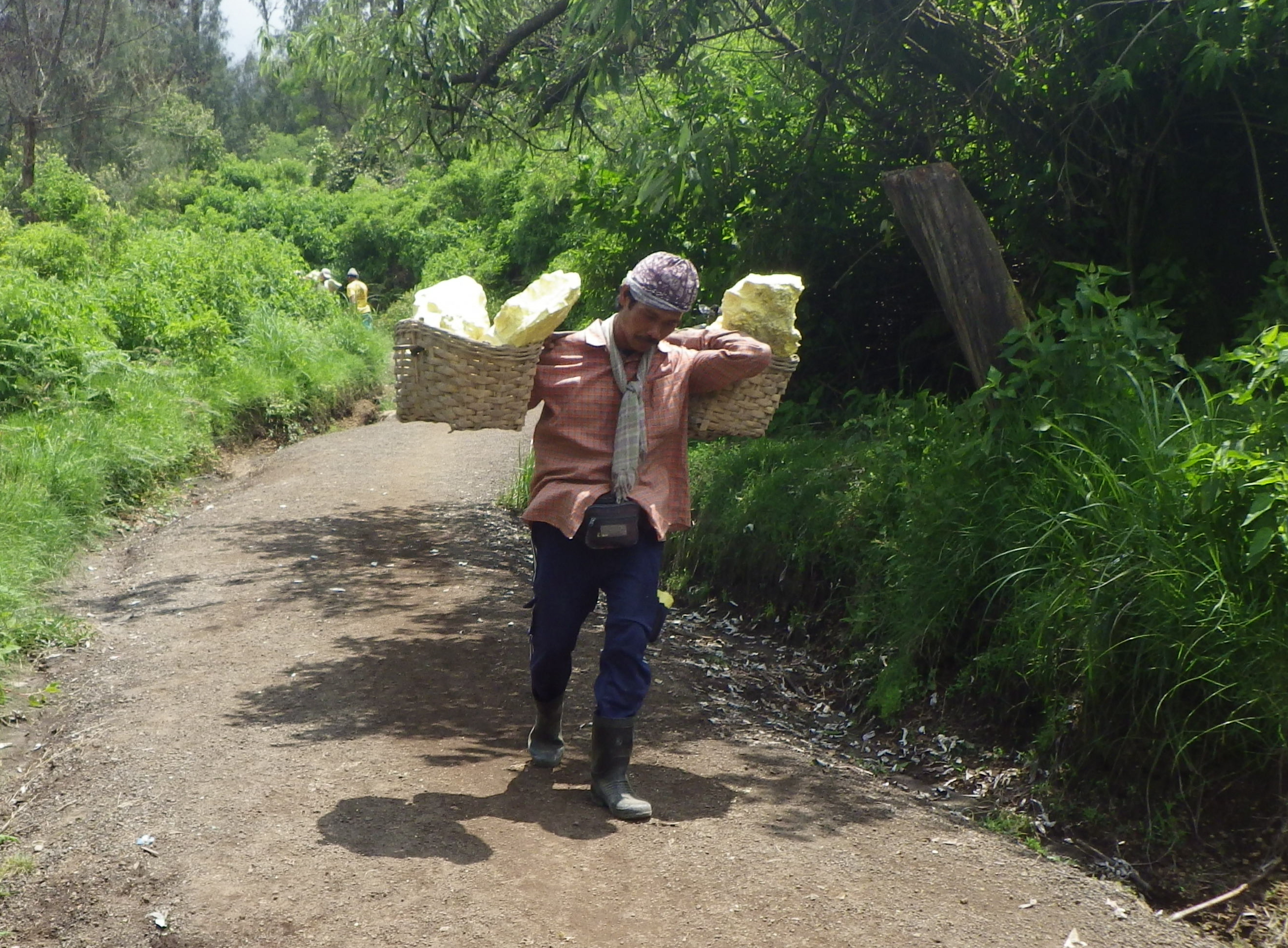
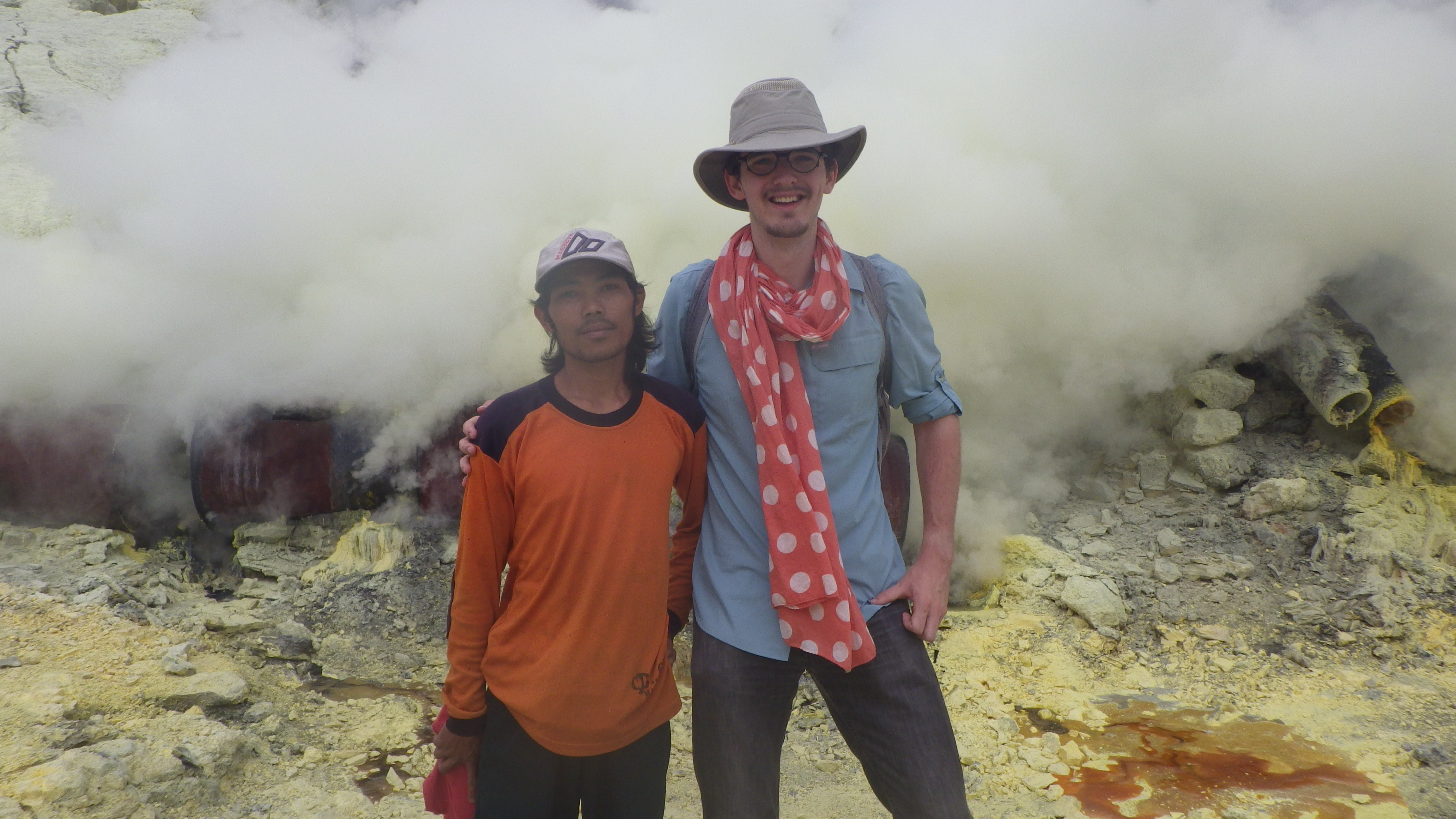
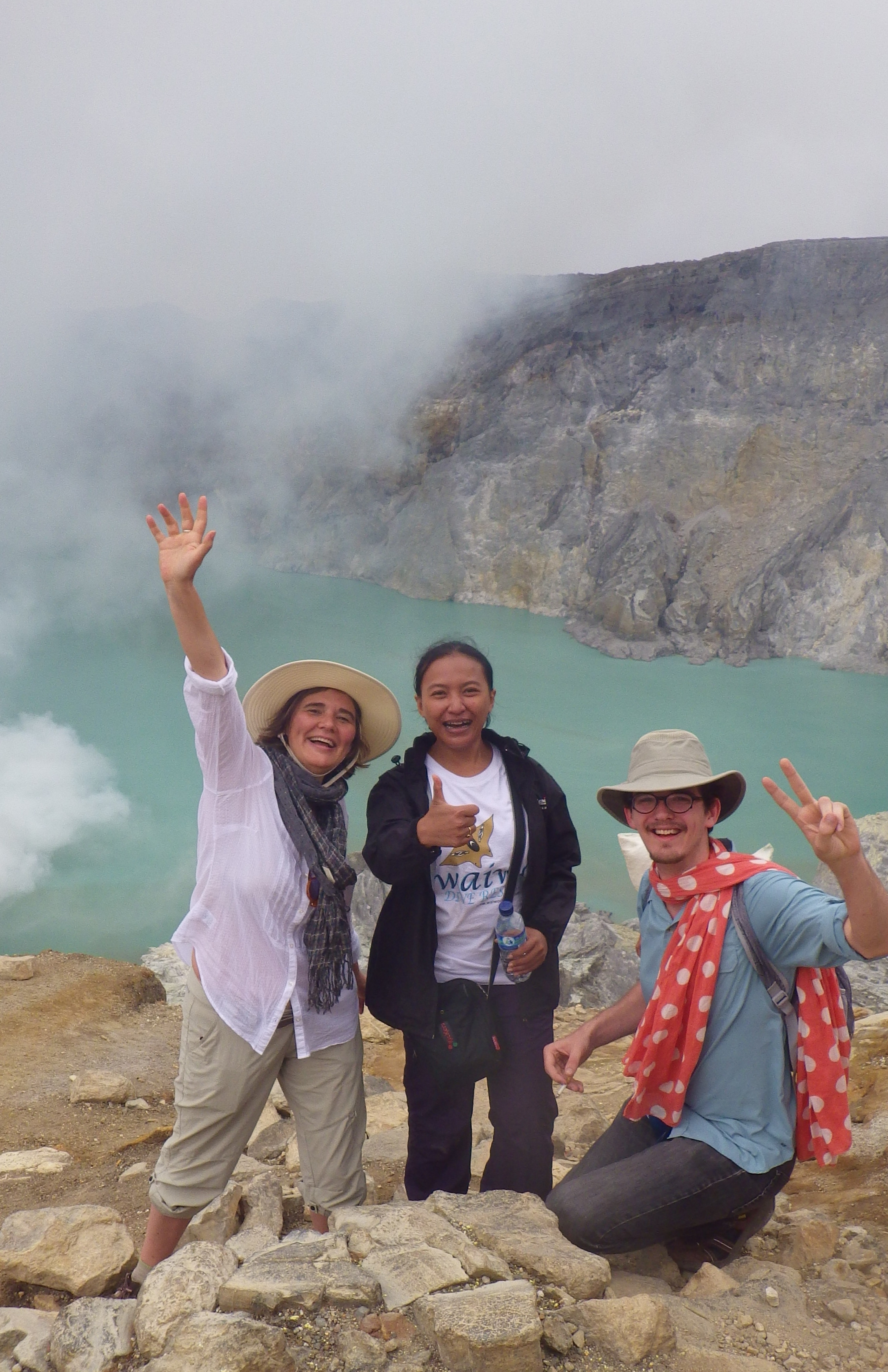
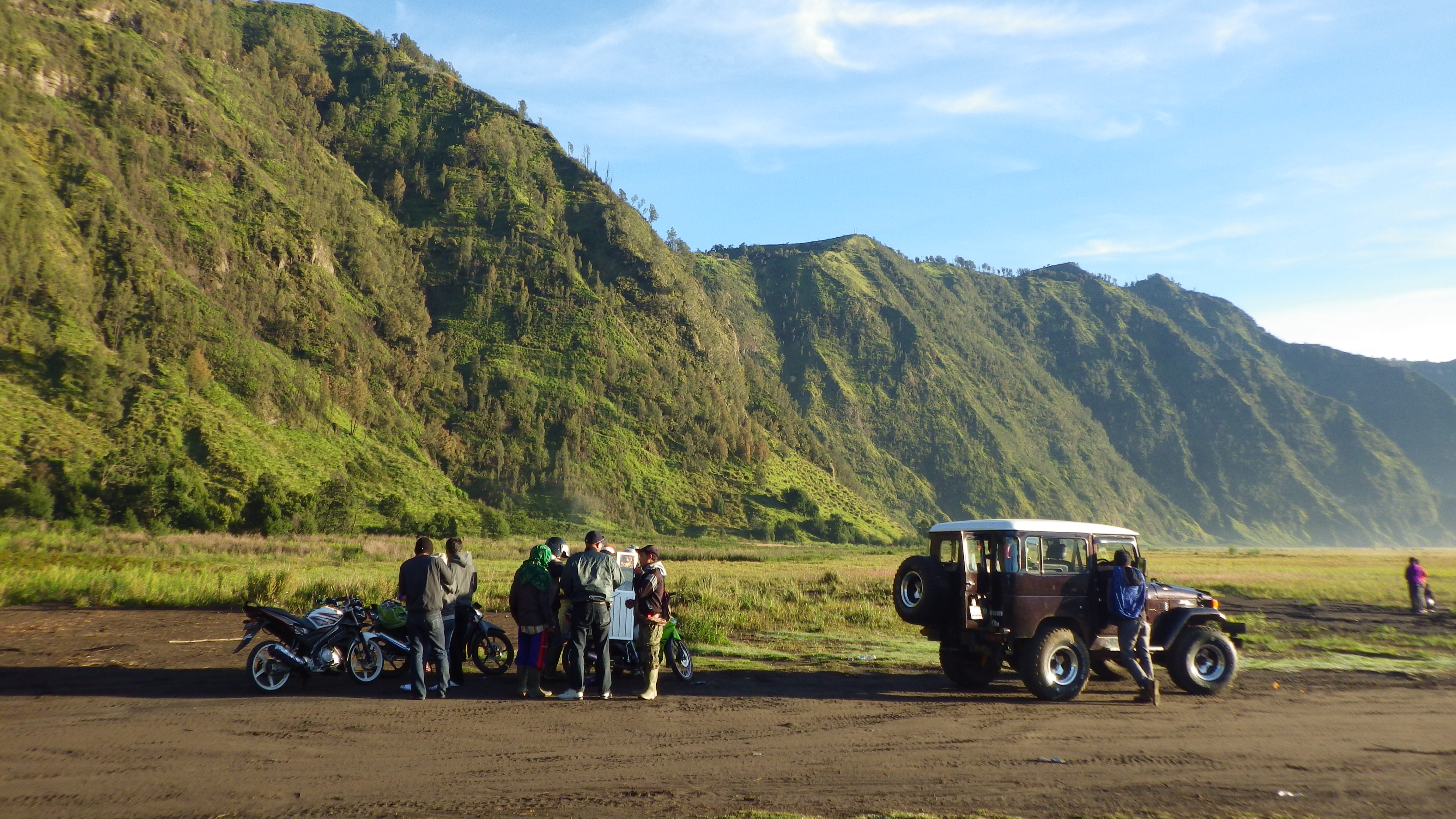
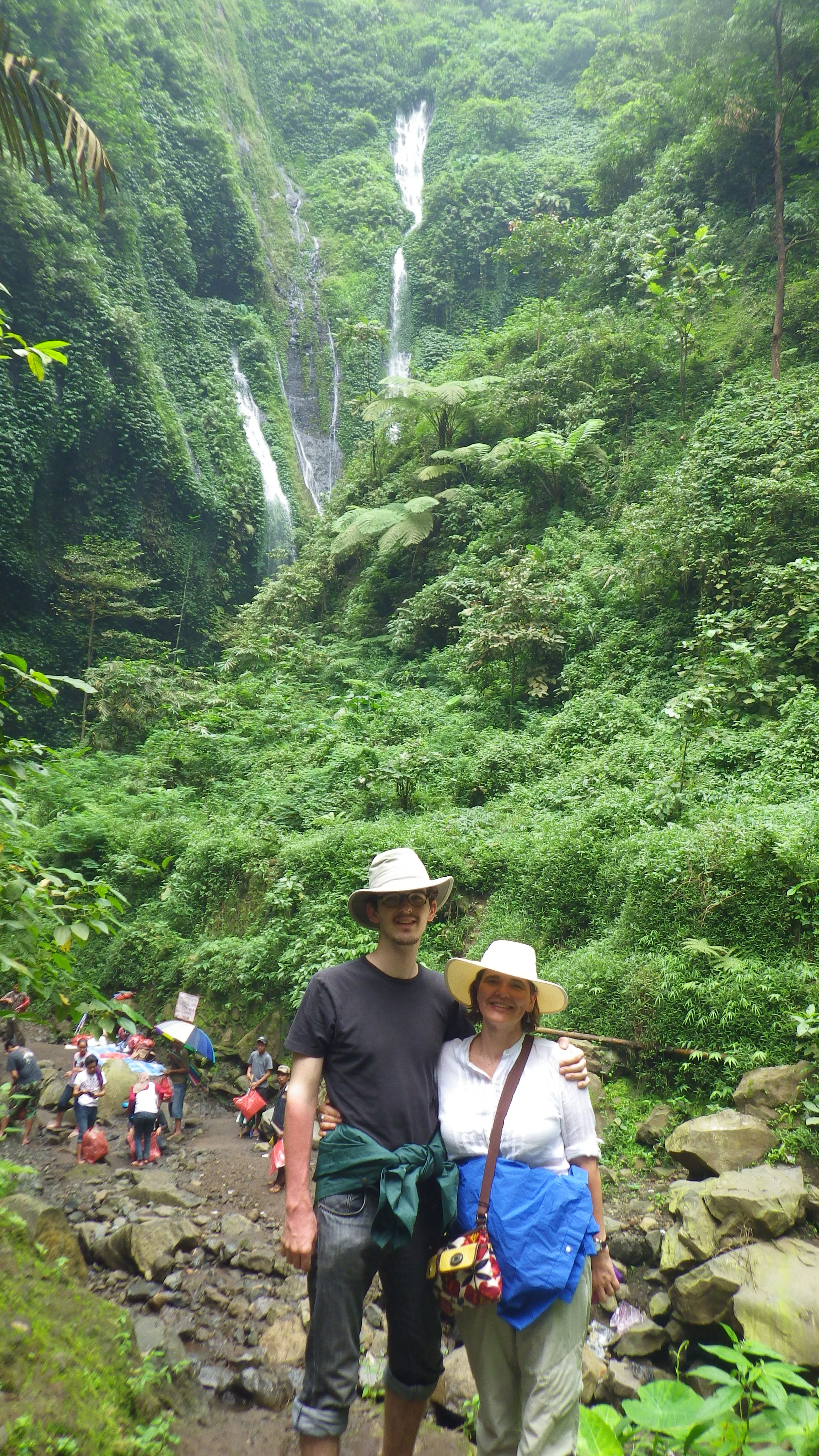
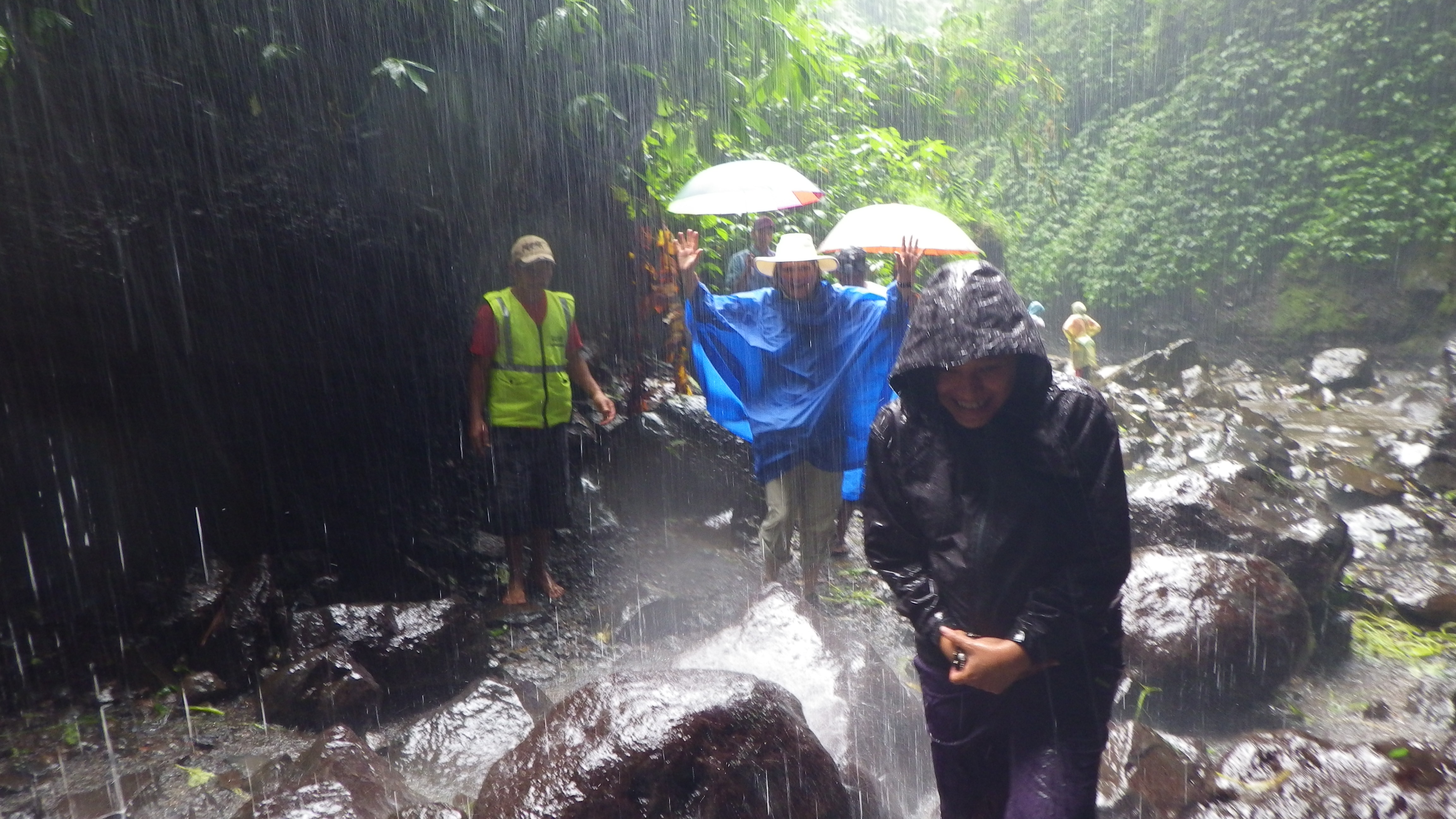
In Surabaya we were picked up by Petjong (hope I spell this right), a friend of Erni’s. Next step, picking-up Marnix, who flew in from Jakarta. By midnight we are our way to Bromo, were we are supposed to start climbing at 4 am to catch the sunrise. Well, we got caught in a traffic jam at 2 am (never seen so many trucks in the middle of the night on a little mountain road). Catching the sunrise was not going to happen so we changed our plans and went to the Ijen volcano instead (we had planned to do that on Sunday). I thought it was close by. Ha-ha, nothing is close by. We got there around 11 am (napped a little in the car) driving through the most stunning countryside I have ever seen. The hike up the volcano is about 4 km of pretty steep climbing. We started enthusiastically but about half way in I though, screw the volcano, I am dying. Marnix had already left me behind and Erni was dragging behind me (smokes too much, like all Indonesians). I thought she would be really glad if I told her I am giving up. Hell no. When she saw me she said: Promise adventure, Tanja. We go! Slave driver! But I am so glad she was. Seeing the crater of the Ijen Volcano is absolutely stunning. The walls are gray and yellow and the crater lake is the most beautiful color of turquoise. This is a volcano that is actually minded for sulfa. Koelies (carriers) are going up the volcano 2-3 times a day to carry down two baskets (40 lbs each) down the mountain. National Geographic did a report on this not that long ago. But, it is amazing that this is still done manually. But that is true for so many things in Indonesia. For example, most of the agriculture activities are done manually. Instead of parking meters and garages guys show up where ever you want to park to help you in and most importantly help you out. This is for an other blog, though. Back to the journey of the volcanos. After climbing the Ijen and struggling back (mind you had not seen a bed in 24 hours) we continued our journey back again to the Bromo. Had not given up on the original plan. We left around Saturday 4 pm. After about 2-3 hours Petjon asked if we mind taking a shower at his brother’s place. Sounded good to us as we were all smelling like match sticks form all that sulfa smoke. At brother’s, Marnix and I actually crashed in a bed (wow what luxury) for a few hours to be awaken at around 1 pm. I spend the next few hours sort of dozing or at last keeping my eyes closed so I wouldn’t get a heart attack from the way Petjon (and other drivers for that matter) weaves in and out of traffic. It was still dark when we arrived at the village near the Bromo (high in the mountains). It was full of jeeps and motorcycles ready to bring tourists to the top (you can’t walk to it in the dark). As we had our own jeep we started crossing what seem to be a big sand box. After about 20 minutes Erni and Petjon got out of the jeep and started negotiating with some guys outside. Next thing Marnix and I know is we are on motorbikes and starting the most thrilling part of our journey. My God, it was dark, cold and just so exciting to be on the back of a motorbike going up this steep mountain road. To be honest nothing could beat that. The sunrise was sort of a let down. Yes it is pretty, but you have to watch it with hundreds of other people. The decent, again on motorbikes was much more breathtaking. Just see the pictures. After all of this, it is only about 8 am. The day had just started, enough time to go and have breakfast (Pegel a sort of salad with peanut sauce and hot coffee with Ginger to wash it way. Delicious!) and continue our exploration of the Bromo-Tengger-Semeru National Park. Driving through the most stunning mountain scenery we arrived at a little hamlet where we started our climb to see Madakaripura Waterfall. Words can’t describe its beauty.
We ended this smorgasbord of Indonesian’s natural beauty with a shower in a public rest top and prayer for Petjon in the mosque.
What an adventure!


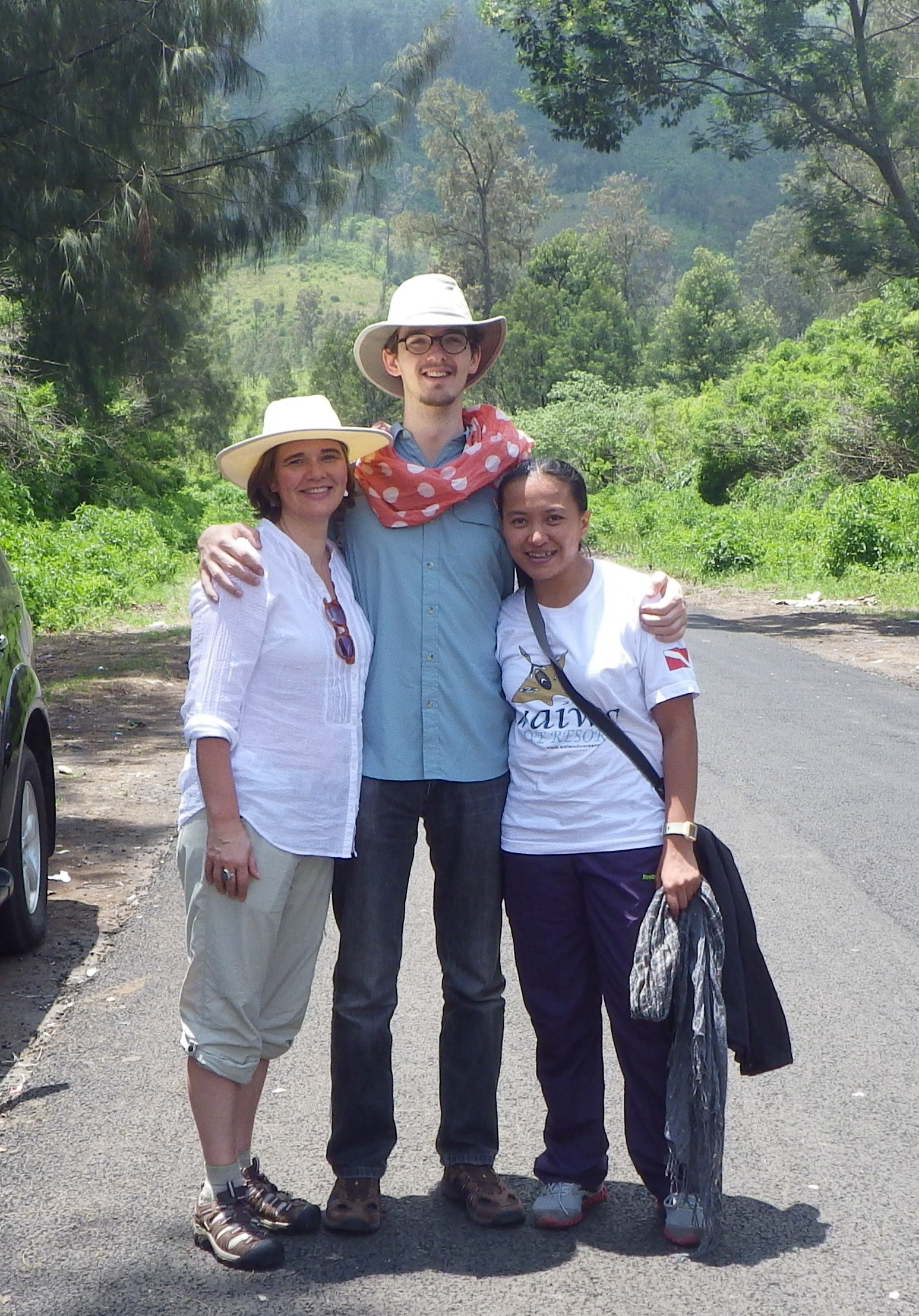






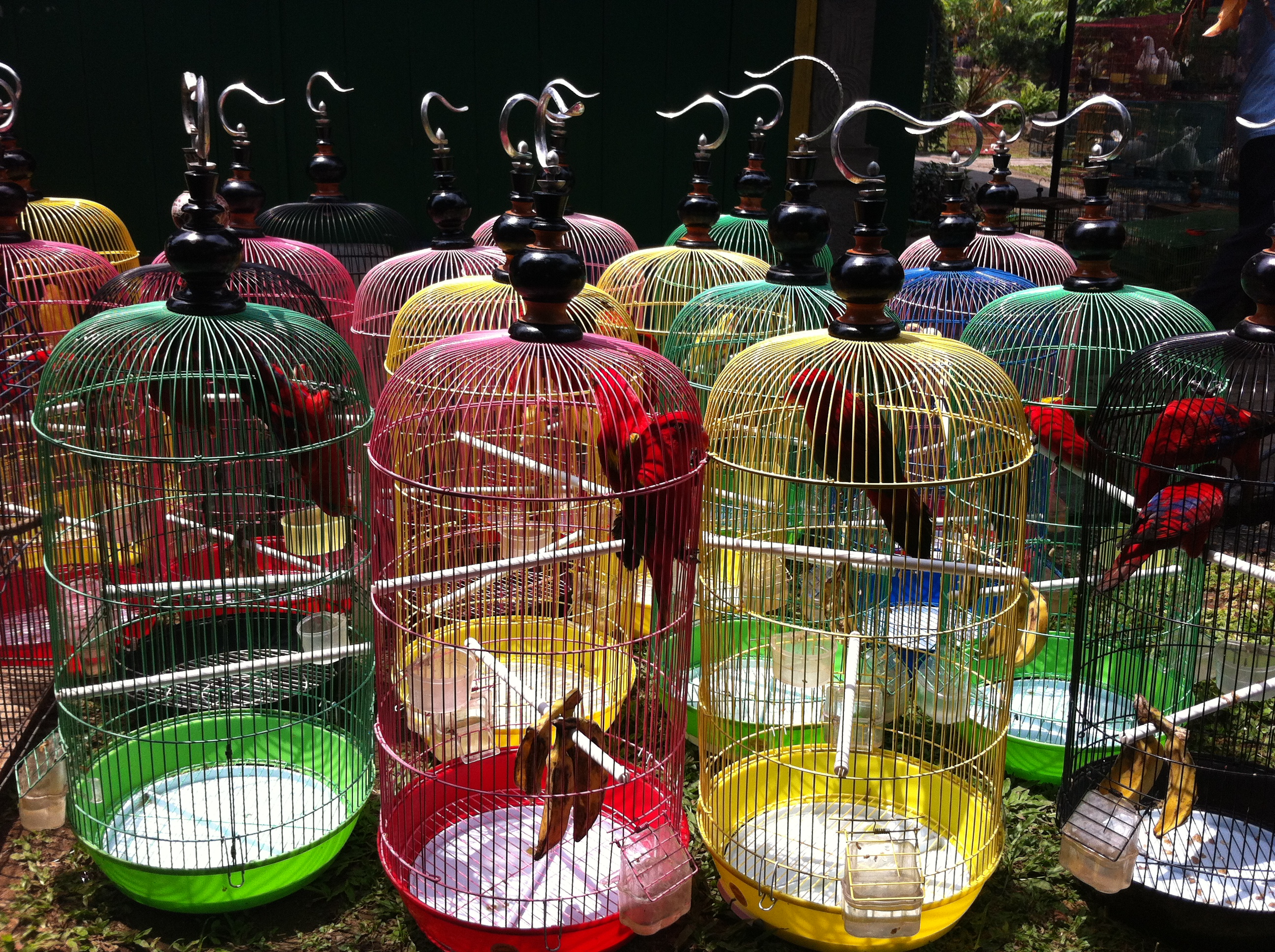
This is the first weekend I actually spend the whole time being a tourist. My room-mate, Erni, has a husband and daughter in Jokja (as the locals call it). So instead of flying back from Bali to Semarang we flew to Jokja. Being a poor TEFL teacher in Jakarta, Marnix took the opportunity of having his Mom in Indonesia to join me in Jokja. We had a ball. Hesitant at first we quickly discovered how wonderful it is to see the city from a Becak. We actually got very lucky because our driver turned out to speak English pretty well and knew all the ins and outs of Jokja. We started of at the bird market. We discovered that singing IS for the birds here. They have all these beautiful birds who they use for singing competitions. They actually train them to sing in certain ways and if they win you are in the money!
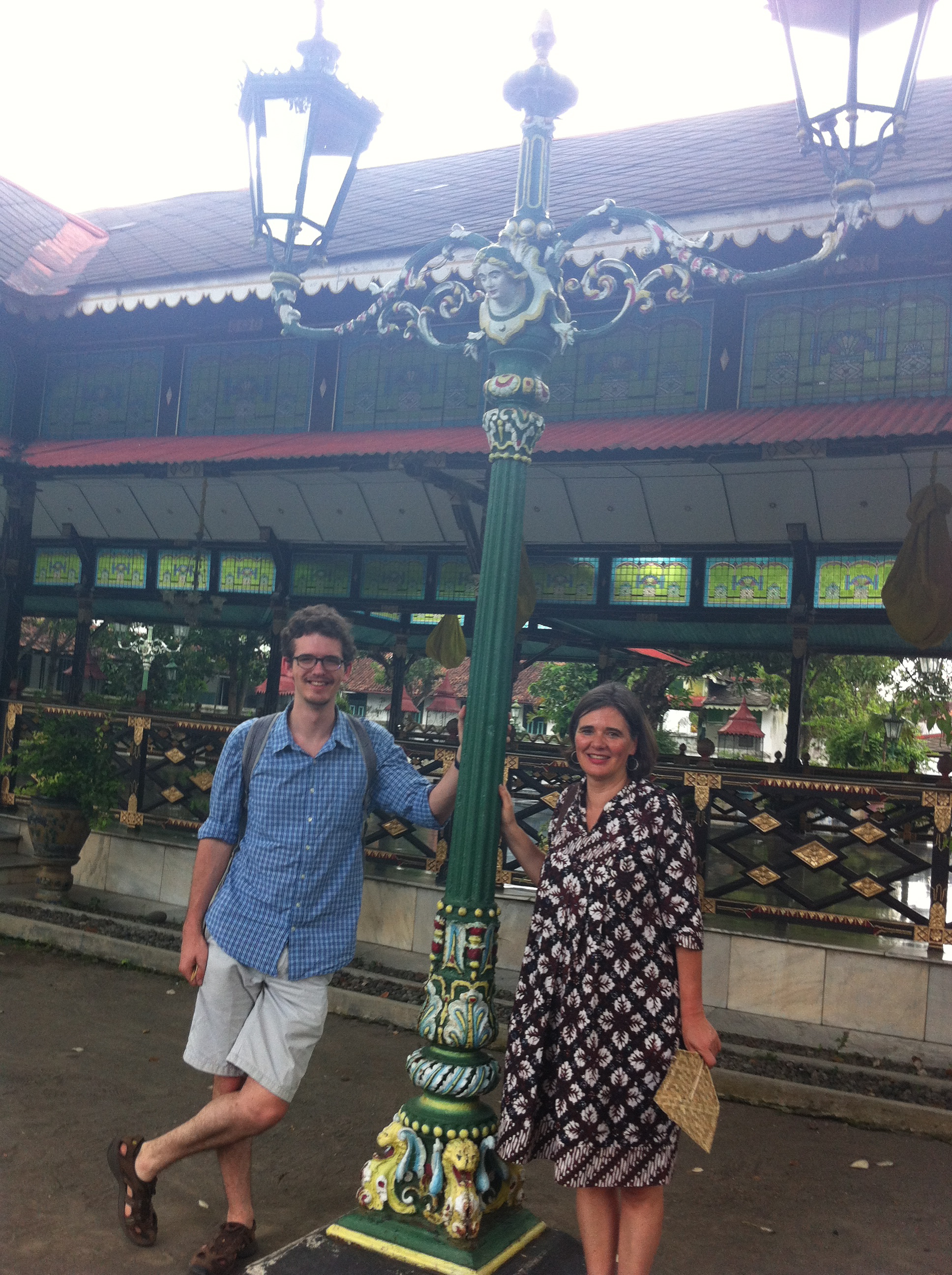
Next stop was the old water palace, the Taman Sari, of Sultan number 6, I think. He liked to be a peeping Tom while his wives bath so he made this elaborate bath complex. Most of it went into disrepair and was hurt by earthquake but the above ground bath are still there. Gorgeous. The Keraton, the sultan’s palace was next on the list. Yokyakarta is a sultanate and actually is an autonom region, sort of a city-state. The Sultan is and monarch and head of government. It is by far the best run city in the country. There is something to be said for benign dictatorship! It is still corrupt but not as much as the rest of Indonesian government. Their big hero is Sultan IX. And for the leienaren reading this. He went to Leiden and was member of Minerva. Morgen!
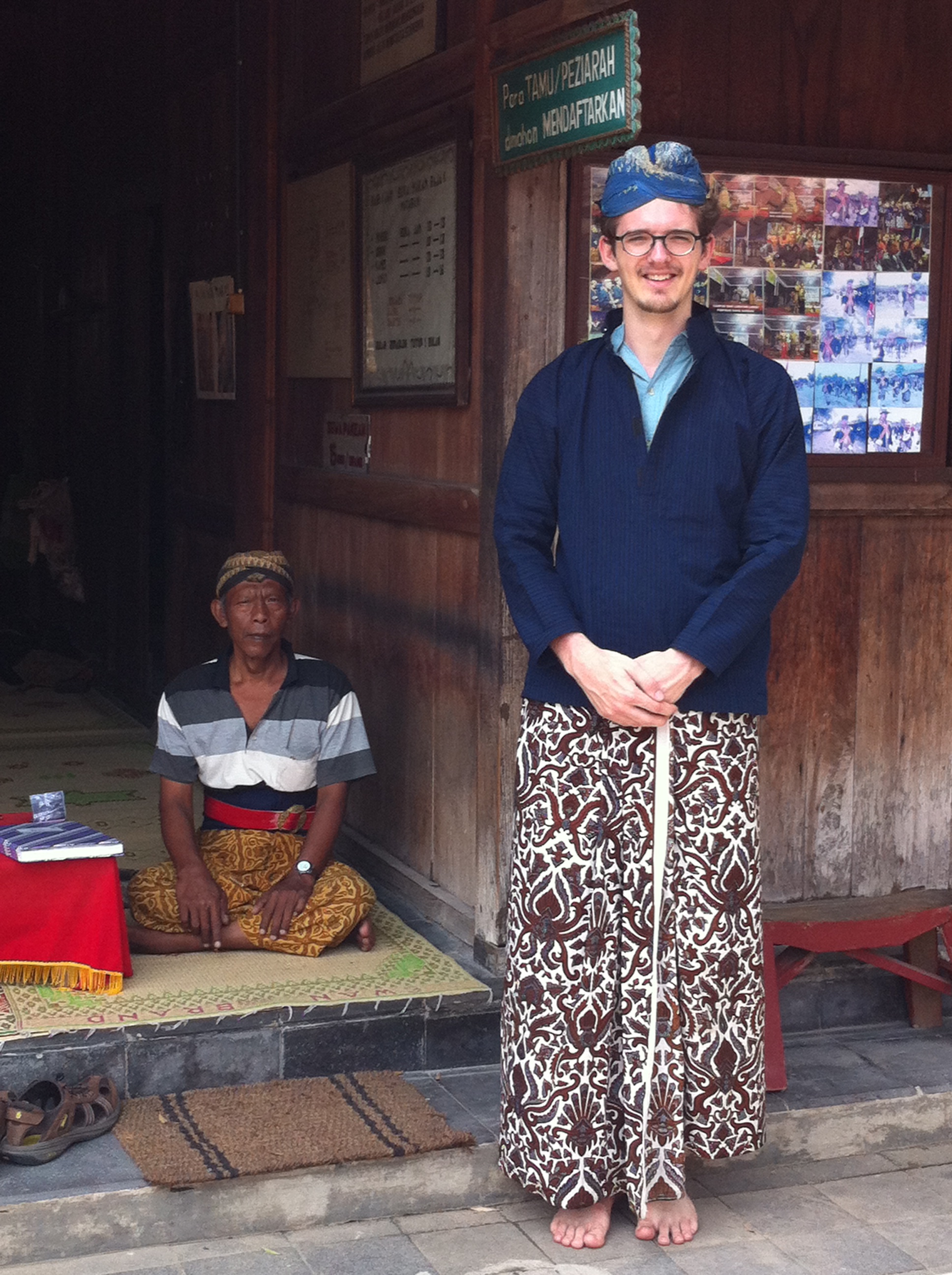
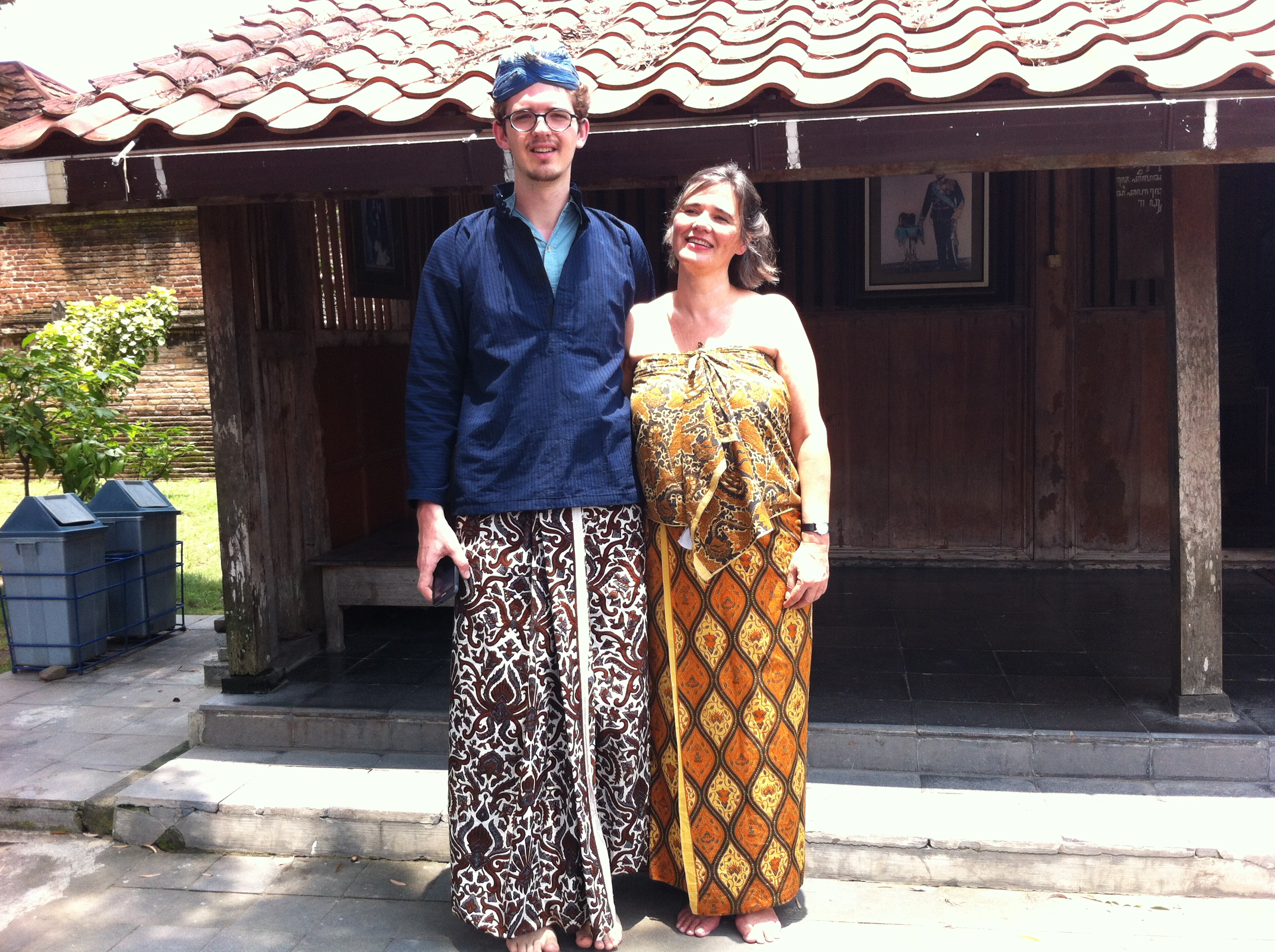
The next day we went to Kotagede, a lovely little village known for its silver. The silver was ok but most impressive was the tombs of all the sultans. First of all, we had to dress in traditional clothing in order to enter the graveyard. Our guide seem to be one step away from following his holinesses in the grave. With all the reference given to their dead monarchs there is not much pump and circumstances in the way they are buried. No elaborate tomb as we have for our European monarchs.
The highlight for Marnix this weekend was probably the Cobra and Python tasting which my friend, Iin, had arranged for him. The blood drinking had to be canceled, though. It wasn’t fresh anymore. for me it was too blood chilling!

Start of our Becak tour

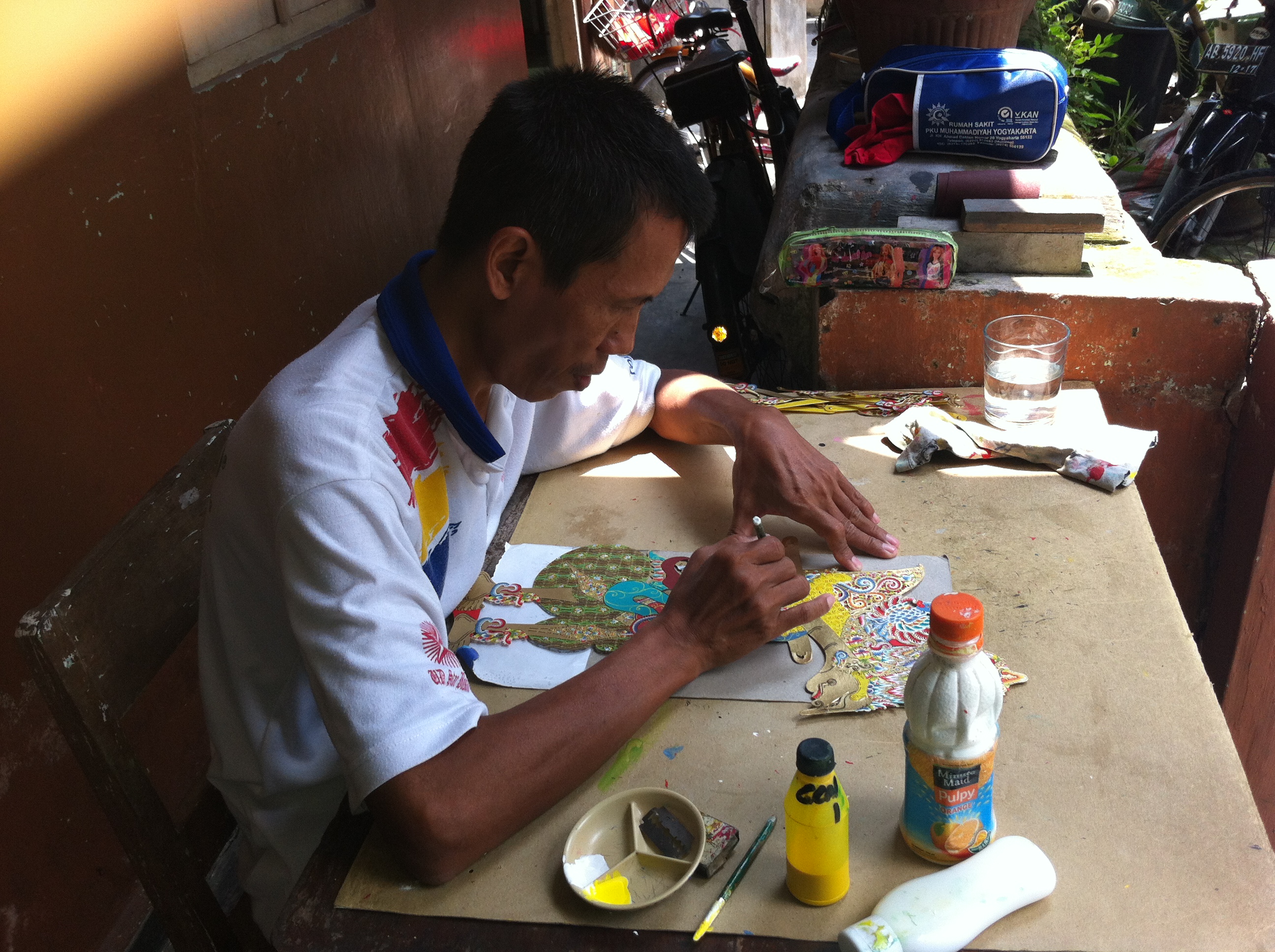


The Bele driving the Becak driver






 The Indonesian Pilgrimage of Tanja Eikenboom